Book Review: Ruined Sinners to Reclaim

My Rating – If you are looking for something

Level – Long, at just under 1,000 pages before refences/indixes; Advanced, likely to be used as a reference for sermon prep or writing papers, requires higher level of knowledge of history, theology, etc.

Summary

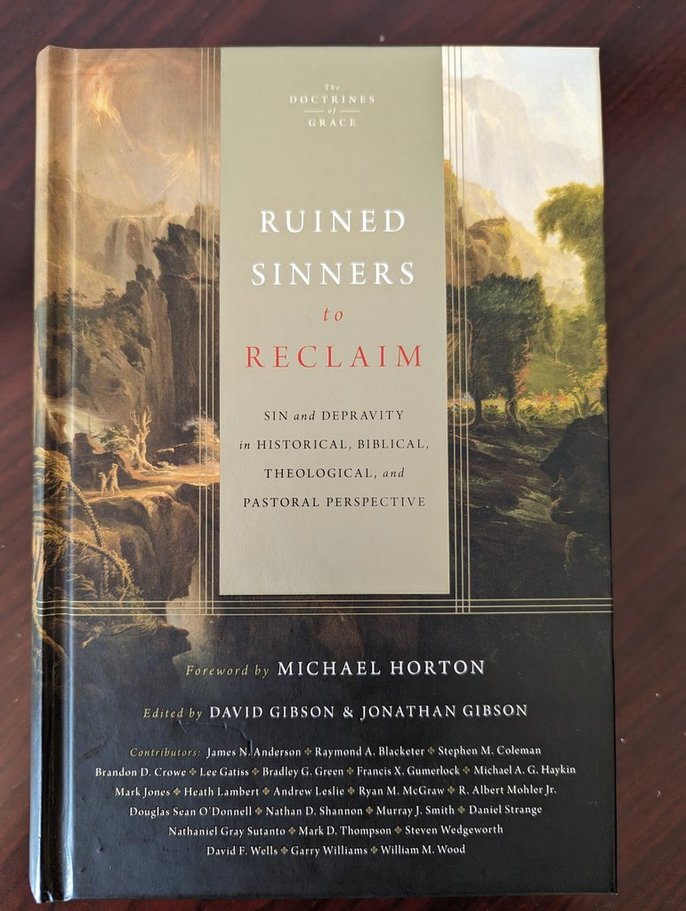
The rather long subtitle sums it up relatively well. This book looks sin – what it is, it’s impacts on people and actions, and the impacts of original sign – through church history, Biblical understanding, theology, and finally ‘pastoral’ which chapter varied on audience, some where written for pastors, others looked at overall interaction between people and to the church from a modern perspective. The book is actually part two for the Doctrine of Grace series (for which I assume there will be five).

The book has 30 chapters, after a forward by Michael Horton there is an introduction chapter, before beginning Part 1 Church History. Most of the chapters are named with a literary theme, so I’ll mention just the subtitle, which is more informative. Part 1 includes chapters on: Patristic Tradition; Augustin, Pelaguis, and the Question of Original Sin; Pseudo-Augustinian Treatise on Predestination; Luther v. Erasmus; Early Post-Reformation Theology; Synod of Dort; Old Princeton and Imputation; English Particular Baptists. Part 2 reviews sin in the Bible and chapters include: Genesis-2Kings; Wisdom Literature; Prophets; Synoptic Gospels and Acts; Johannine Literature; Pauline Epistles; Pastoral Epistles. Part 3 covers Theology and includes: Comparative Religions and Alternative Philosophies; Biblical Theodicy; Covenant; Imputation; A Protestant Assessment of the Doctrine of Concupiscence; Psychical Effects of Sin; Modern Theology (my note – this refers to late 19th century thinkers); Theology; Sinlessness of Christ. The final chapter covers pastoral/modern issues such as: impact of secularization of understanding sin; elenctics; apologetics; counseling; and preaching.

My Thoughts

This is quite a magisterial work. I’m always genuinely interested as to how publishers decide top put everything into one volume, instead of four shorter works. Not that they would actually be all that short, transposing to typical paperback, I think each new book would be over 300 pages. All that to say, there is a great deal of content in this book. This best of which was likely section 2, on sin throughout the Bible. The entire book is taking the reformed position, and you can clearly see the writers taking that ‘side’, especially in the theology section, but the Bible section works through exegesis, which often makes the strongest argument to most people on the totality of sin. I could also see it being used often when handling theological topics in preaching or even Bible studies on the sections listed. Similarly, the section on pastoral practice has strong chapters, particularly those on secularization and preaching.

Probably where the book suffers the most, is where most collected writings suffer, in lack of consistency, and in some cases repetition. For the most part, the chapters functioned as summaries of academic work. However, some read almost at the popular level, especially in the history and Bible sections. I really appreciated this as someone who is not an academic. However, other chapters were so narrow and academically focused that it had me wondering how many angles can dance on the head of a pen. That being said, I’m not entirely sure who the target audience is for this book. If it is to Bible study/Sunday school teachers, then it was too much. However, if it was meant to be for an academic audience, then it would fit. With every chapter being written independently, and probably have word limit ranges, there were instances were people or events were defined multiple times, as the editors likely couldn’t cut too much. This isn’t necessarily bad, especially if the book is meant more for refence, but reading it straight through, gave it a sense of discontinuity. However all chapters were strong on their own, with perhaps the exception of ‘Evangelizing Fallen People’. The chapter was not really about evangelism, and the subtitle related to apologetics, which was the topic, however it was mostly an argument for Van-Tillian Presuppositionalism. I can see where the author would say that relates to sin, but it didn’t quite fit for me.

The section on Theology was very strong, particular the chapter on theology of sin (Incurvatus Est in Se). There are also two chapters on depravity and covenant with Adam that handle covenant and imputation that was strong enough to stand as its own book. There is some interaction with competing theology, with Schleiermacher in the Theology section and Erasmus and Pelagius in the history section. However, those promoted full on heresy. I would have liked some discussion of heterodox theology or those of other Christian traditions, such as Wesley, Finney, Catholic thought, or even ‘prosperity gospel’. However, I understand there are limits.

Overall, if you are looking for a refence book on sin, I’m not sure you could do better to start with this. Breaking it into the four categories chosen will go a long way in helping a study or a sermon.

*I received a free copy of this book in exchange for an honest review.
Book Review: O Sacred Head, Now Wounded

Rating: Must Have

Level: Easy (though helpful to have familiarity with liturgy); Long (400+), but each day is less than 10 pages

Summary

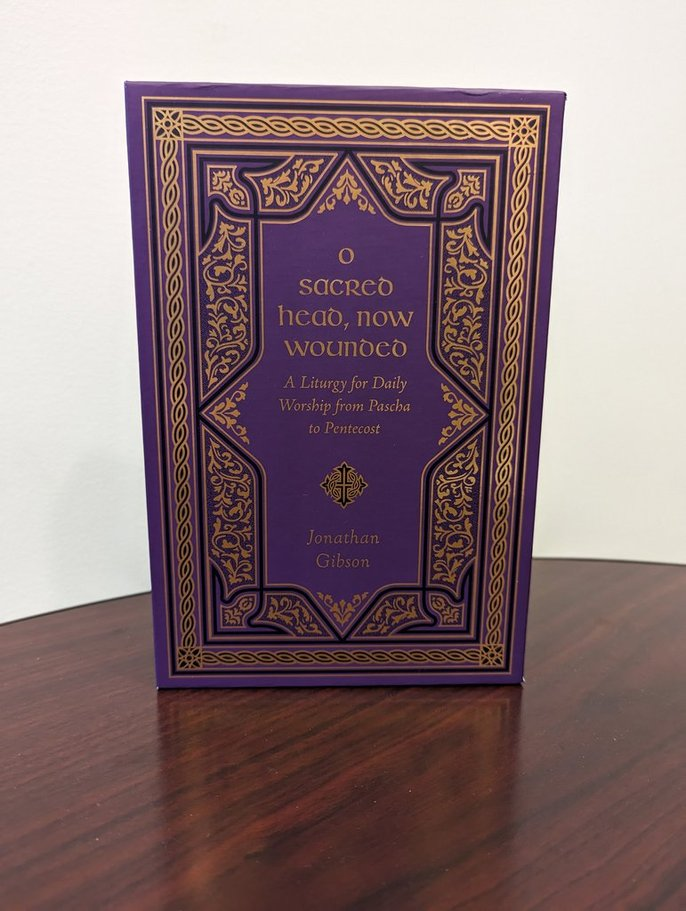
This is the third book by Gibson and Crossway of a liturgy for daily worship. The first, being a general 31 day guide called Be Thou My Vision, the second one, like this one is focused on a part of the church calendar, O Come, O Come, Emanuel (see my review here), which went roughly from Advent to Epiphany. I have to admit, I was confused by the dates of this book. The subtitle is A Liturgy for Daily Worship from Pascha to Pentecost. I thought this would be a good Monday to post, as Pascha is (I thought) another name for Easter and Pentecost is the 50th day after Easter. However, this is actually a Lent (timeframe) devotional, though Gibson writes “this [book] is not intended to be associated with the traditions of Lent..” I find this an odd and confusing choice.

This book is neither a 40 (or 46, as Sundays don’t count towards Lent) day Lenten Devotional, not is it a 50 day Easter (Pascha) to Pentecost devotional. Instead, it is a 48 day devotional that starts on Ash Wednesday, proceeds 42 days, and then has special service days – Maundy Thursday, Good Friday, Holy Saturday, Resurrection Sunday (Easter/Pascha), Ascension Sunday (the Sunday after Ascension Day, which is 40 days after Easter),and Pentecost Sunday.

After a preface and acknowledgements, the books starts with an intro (titled Remembering Jesus), where Gibson makes something of a defense of ‘holy’ days, or having special days of remembrance. It is a really interesting chapter, and if you are in the reformed community, you know that there is a pretty sizeable split with strong feelings on both sides of ‘holy days’. 

The following chapter is a very useful (especially if you aren’t used to Liturgy) ‘how-to’ on using the format, which includes: meditation, call to worship, adoration, reading the Law, confession of sin, assurance of pardon, creed, praise, catechism, prayer for illumination, scripture reading, praise, prayer of intercession (and then further petition/prayer), Lord’s Prayer, benediction, and finally a postlude (doxology).  

There are also appendixes for tunes to various parts of the worship, Bible reading plan, and Author, Hymn, & Liturgy index.

My Thoughts

I still find the subtitle odd and do not understand why they would give it such a name. As noted above, Gibson doesn’t want this to be a traditional Lenten style devotional, but it would seem to me that explaining the difference in the book while giving a clearer title would be more helpful. Another confusing aspect is at one point he refers to this season as the ‘Pascal Season’, which coincides with Lent. This is again odd, as most English speaker use Easter not Pascha, and Easter Season (or Eastertide) is the time from Easter to Ascension Day. It is truly a perplexing decision. That being said, it is another wonderful book. I couldn’t come up with much new to say about how it works, so see below for what I wrote about O Come, O Come, Emanual

Honestly, if you attempt any personal or family worship this is a must have. I am a big fan of the structured (liturgical) worship, especially for family devotion. It really doesn’t make it easy to lead or do with your family or community. Really my only (minor) quibble with this is that with 16 parts, it might be just a little too long. However, if you are doing this with a family with young children or you find yourself short on time, there are always parts you can cut. That being said, some sections are only a line or a paragraph long; this shouldn’t take an hour or any extended time. 

If you are unfamiliar with liturgy or structured daily worship this is an outstanding way to get into it. Unless you are from a pretty free-flowing Baptist/non-denom/mega-church background you will probably recognize parts (if not all) of these sections. If you are Anglican, you can see the clear influence of the BCP (which is probably the best book that exist for personal and family worship). 

I know some people don’t like the repetitive nature of some parts of guides like these, saying and can be rote or unfeeling, but really that is up to you. If you don’t take it seriously, or just mindlessly repeat things, then yes, the downside is that it can be meaningless. However, the upsides are a daily reminder of how to worship God, what He has done for us, what so much of the church today and most have always believed and recited, and of course – scripture reading. This is more important than every in church life, especially if you do this as a family/community and use it to help shape and guide children in their beliefs. This is true of any structured worship, but I think is even more important for this time of year, when we are pulled away in so many directions, with so many competing interesting. As I said above, if you are looking for personal/family devotion/worship, this is a must have. 

*I received a free copy of this book from Crossway, in exchange for an honest review. 

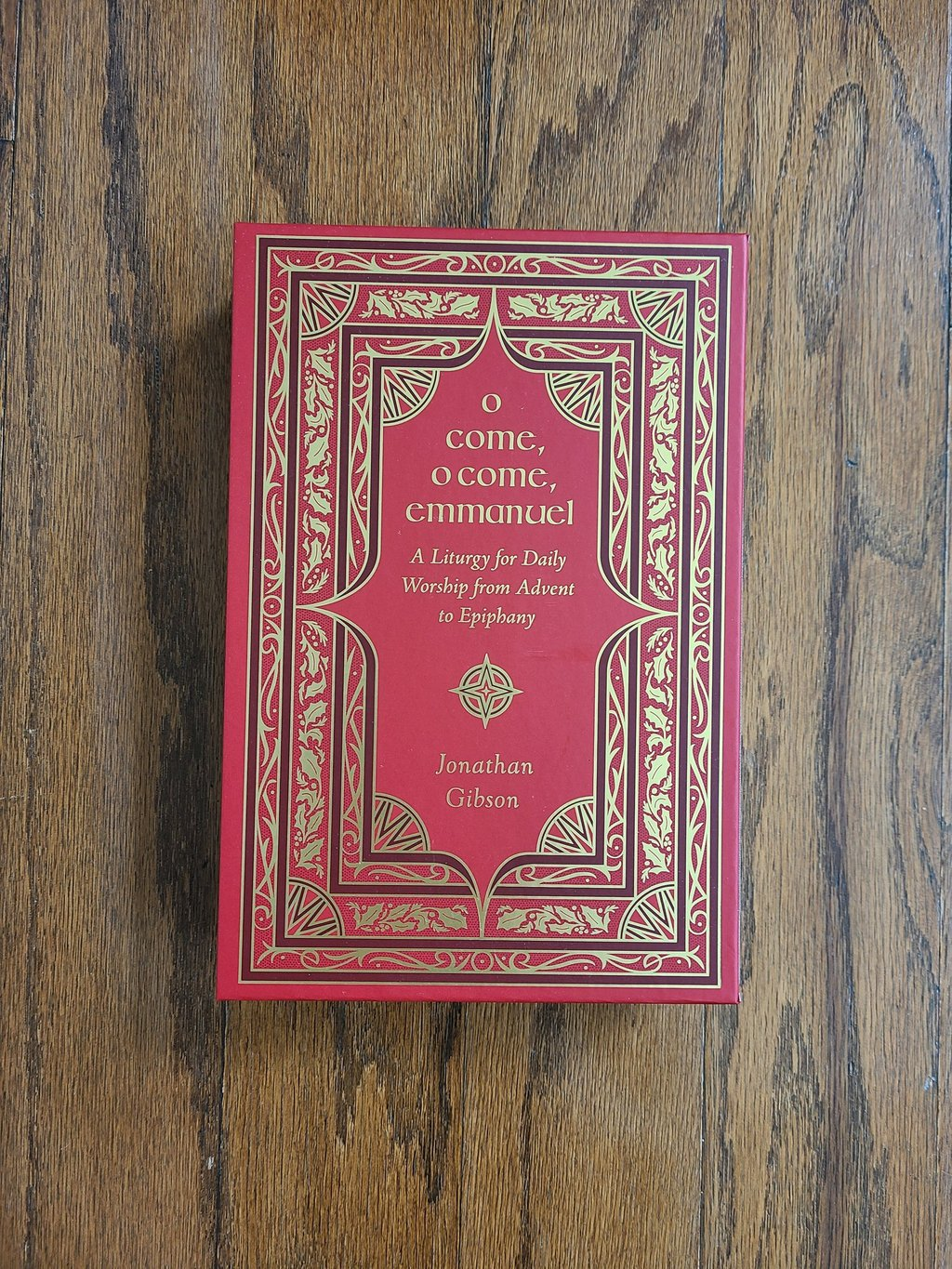
Book Review: O Come, O Come, Emmanuel

Rating: Must Have

Level: Easy (though helpful to have familiarity with liturgy); Long (400+), but each day is less than 10 pages

Summary

This is another outstanding book by Gibson and Crossway, similar to Be Thou My Vision, but this one being focused on Advent, Christmas, and ends on Epiphany. For those unfamiliar, that is January 6th, so to have a round number of 40 days, it may start before ‘official’ Advent. That was the case this year, Advent started yesterday (which is late in the chronological Calendar), and the book starts on November 28th, which was last Tuesday. 

After a preface and acknowledgements, the books starts with an intro (titled Waiting For Jesus), where Gibson explains his reasons/hopes for this book. The following chapter is a very useful (especially if you aren’t used to Liturgy) ‘how-to’ on using the format, which includes: meditation, call to worship, adoration, reading the Law, confession of sin, assurance of pardon, creed, praise, catechism, prayer for illumination, scripture reading, praise, prayer of intercession (and then further petition/prayer), Lord’s Prayer, benediction, and finally a postlude (doxology).  

There are also appendixes for tunes to various parts of the worship, Bible reading plan, and Author, Hymn, & Liturgy index.

My Thoughts

Honestly, if you attempt any personal or family worship this is a must have. I am a big fan of the structured (liturgical) worship, especially for family devotion. It really doesn’t make it easy to lead or do with your family or community. Really my only (minor) quibble with this is that with 16 parts, it might be just a little too long. However, if you are doing this with a family with young children or you find yourself short on time, there are always parts you can cut. That being said, some sections are only a line or a paragraph long; this shouldn’t take an hour or any extended time. 

If you are unfamiliar with liturgy or structured daily worship this is an outstanding way to get into it. Unless you are from a pretty free-flowing Baptist/non-denom/mega-church background you will probably recognize parts (if not all) of these sections. If you are Anglican, you can see the clear influence of the BCP (which is probably the best book that exist for personal and family worship). 

I know some people don’t like the repetitive nature of some parts of guides like these, saying and can be rote or unfeeling, but really that is up to you. If you don’t take it seriously, or just mindlessly repeat things, then yes, the downside is that it can be meaningless. However, the upsides are a daily reminder of how to worship God, what He has done for us, what so much of the church today and most have always believed and recited, and of course – scripture reading. This is more important than every in church life, especially if you do this as a family/community and use it to help shape and guide children in their beliefs. This is true of any structured worship, but I think is even more important for this time of year, when we are pulled away in so many directions, with so many competing interesting. As I said above, if you are looking for personal/family devotion/worship, this is a must have. 

*I received a free copy of this book from Crossway, in exchange for an honest review.