My Rating – If you are looking for something
Level – Long, at just under 1,000 pages before refences/indixes; Advanced, likely to be used as a reference for sermon prep or writing papers, requires higher level of knowledge of history, theology, etc.
Summary
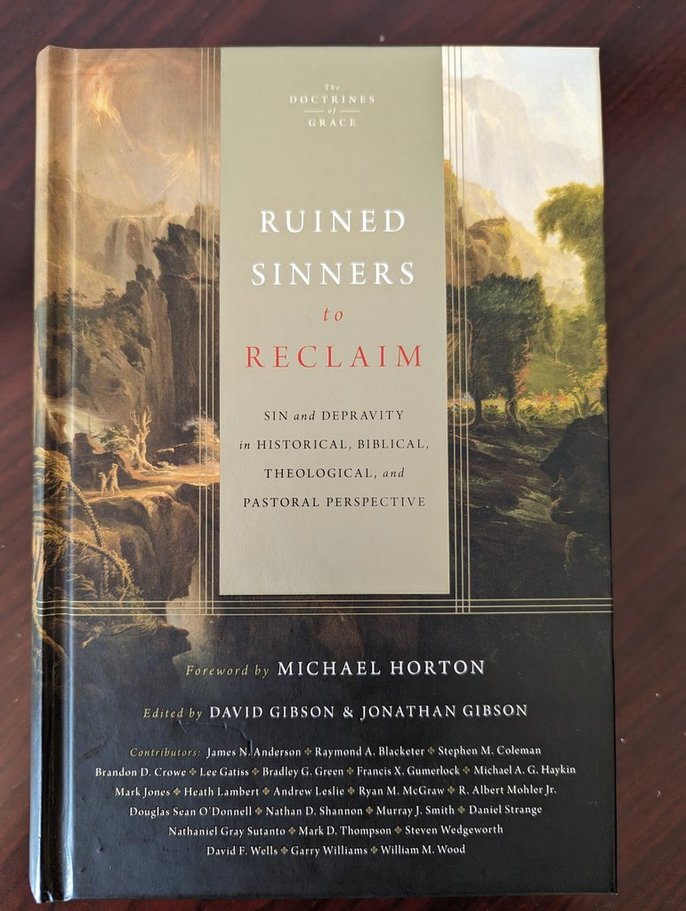
The rather long subtitle sums it up relatively well. This book looks sin – what it is, it’s impacts on people and actions, and the impacts of original sign – through church history, Biblical understanding, theology, and finally ‘pastoral’ which chapter varied on audience, some where written for pastors, others looked at overall interaction between people and to the church from a modern perspective. The book is actually part two for the Doctrine of Grace series (for which I assume there will be five).
The book has 30 chapters, after a forward by Michael Horton there is an introduction chapter, before beginning Part 1 Church History. Most of the chapters are named with a literary theme, so I’ll mention just the subtitle, which is more informative. Part 1 includes chapters on: Patristic Tradition; Augustin, Pelaguis, and the Question of Original Sin; Pseudo-Augustinian Treatise on Predestination; Luther v. Erasmus; Early Post-Reformation Theology; Synod of Dort; Old Princeton and Imputation; English Particular Baptists. Part 2 reviews sin in the Bible and chapters include: Genesis-2Kings; Wisdom Literature; Prophets; Synoptic Gospels and Acts; Johannine Literature; Pauline Epistles; Pastoral Epistles. Part 3 covers Theology and includes: Comparative Religions and Alternative Philosophies; Biblical Theodicy; Covenant; Imputation; A Protestant Assessment of the Doctrine of Concupiscence; Psychical Effects of Sin; Modern Theology (my note – this refers to late 19th century thinkers); Theology; Sinlessness of Christ. The final chapter covers pastoral/modern issues such as: impact of secularization of understanding sin; elenctics; apologetics; counseling; and preaching.
My Thoughts
This is quite a magisterial work. I’m always genuinely interested as to how publishers decide top put everything into one volume, instead of four shorter works. Not that they would actually be all that short, transposing to typical paperback, I think each new book would be over 300 pages. All that to say, there is a great deal of content in this book. This best of which was likely section 2, on sin throughout the Bible. The entire book is taking the reformed position, and you can clearly see the writers taking that ‘side’, especially in the theology section, but the Bible section works through exegesis, which often makes the strongest argument to most people on the totality of sin. I could also see it being used often when handling theological topics in preaching or even Bible studies on the sections listed. Similarly, the section on pastoral practice has strong chapters, particularly those on secularization and preaching.
Probably where the book suffers the most, is where most collected writings suffer, in lack of consistency, and in some cases repetition. For the most part, the chapters functioned as summaries of academic work. However, some read almost at the popular level, especially in the history and Bible sections. I really appreciated this as someone who is not an academic. However, other chapters were so narrow and academically focused that it had me wondering how many angles can dance on the head of a pen. That being said, I’m not entirely sure who the target audience is for this book. If it is to Bible study/Sunday school teachers, then it was too much. However, if it was meant to be for an academic audience, then it would fit. With every chapter being written independently, and probably have word limit ranges, there were instances were people or events were defined multiple times, as the editors likely couldn’t cut too much. This isn’t necessarily bad, especially if the book is meant more for refence, but reading it straight through, gave it a sense of discontinuity. However all chapters were strong on their own, with perhaps the exception of ‘Evangelizing Fallen People’. The chapter was not really about evangelism, and the subtitle related to apologetics, which was the topic, however it was mostly an argument for Van-Tillian Presuppositionalism. I can see where the author would say that relates to sin, but it didn’t quite fit for me.
The section on Theology was very strong, particular the chapter on theology of sin (Incurvatus Est in Se). There are also two chapters on depravity and covenant with Adam that handle covenant and imputation that was strong enough to stand as its own book. There is some interaction with competing theology, with Schleiermacher in the Theology section and Erasmus and Pelagius in the history section. However, those promoted full on heresy. I would have liked some discussion of heterodox theology or those of other Christian traditions, such as Wesley, Finney, Catholic thought, or even ‘prosperity gospel’. However, I understand there are limits.
Overall, if you are looking for a refence book on sin, I’m not sure you could do better to start with this. Breaking it into the four categories chosen will go a long way in helping a study or a sermon.
*I received a free copy of this book in exchange for an honest review.
 Monday Morning Theologian