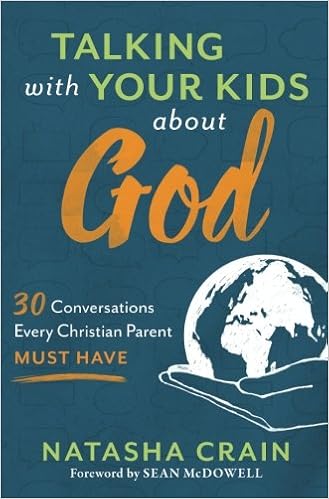
Book Review: Talking with Your Kids about God

Talking with Your Kids about God: 30 Conversations Every Christian Parent Must Have

My Rating – If you have time

Level – Easy; reads quickly, moderate length (just under 300 pages)

Summary
The title of the book is a bit of a misnomer. This isn’t really a parenting or family book. This might be just because I have a three-year old, but when I see ‘kids’, I think children under 10 and skew even younger. This book is really a basic apologetics intro that can also be used with maybe high schoolers or fairly knowledgeable middle schoolers. There are discussion questions after each chapter, broken in to two parts ‘open the conversation’ and ‘advance the conversation’. The former could be used for middle school or newer Christians, the latter for high school, but also for discussion in a small group or other Bible Study. Very few people have much knowledge of apologetics, and this book would likely be new to most parents, let alone ‘kids’.

The 30 conversations are grouped into five equal parts – the existence of God, science and God, the nature of God, believing in God, and the difference God makes. There is an introduction to each part, then the six topics of conversation. Each topic is then summarized in ‘key points’, followed by the ‘conversation guide’ which consist of ‘open the conversation’, ‘advance the conversation’, and ‘apply the conversation’.

My Thoughts
As stated above, this isn’t really a book for kids. Maybe the first two parts would work to discuss with middle schoolers, but the discussion questions certainly seem more advanced. Those two chapters seem to be the strength of the book, as far as a parent is concerned. As parent, it would be worthwhile to read through these, so that you can know the discussions to have with your children as the move on through school and start to learn about so-called conflicts with the Bible and belief in God. I can’t really see reading through this book or using the advanced conversation questions with a child that is first learning of the conflict, but reading through as a parent, it would be a good reminder of the conflicts they will face and if you’ve never learned much in the way of apologetics, this will certainly move you in the right direction.

Maybe I’m underestimating people too much, but I think this book is much more suited to a small group/Sunday School/whatever you call it, discussion than something to read with children. In that sense, I can’t really recommend this for parents, but I think it is worth checking out as a group leader. The book is fairly basic, but I just don’t see that enough adults have ever learned these ideas, so you need to start with them first. Especially the part, ‘the nature of God’, as this moves out of apologetics and into more of a systematic theology.

Two other criticisms I have are that the existence of God, is a pretty good over all part of the book. There are convincing arguments of the existence of a God, but Crain never steps into the realm of the existence of our God, the God of the Bible. Which leads to the most glaring omission in the book, the Bible. There is no major section devoted to ‘the truth of the Bible’ or ‘how do we know the Bible is true’ or something else along those lines. For me, this is where apologetics or knowledge of God has to start.

One surprising strength of the book, is the final part, ‘the difference God makes’. Again, this really lends itself to a discussion group, as it more or less a group of discussion about the impact our knowledge of God should have in our lives. I really enjoyed this section and will likely use it, if not the whole book, with the group that I lead.

Overall, a pretty good book. I’m not sure it met the stated goal of discussion with kids. Catechisms are still probably the best thing for that. However, I do think it would work really well as an intro to apologetics, a basic primer on the knowledge of God, and could open up great discussion on the impact this knowledge has on our lives. With the ‘key points’ and ‘discussion guide’, I think this book could be repurposed into an interest group study.

*I received a free copy of this book in exchange for an honest review

Book Review: Called to Create

Called to Create: A Biblical Invitation to Create, Innovate, and Risk

Rating – If you are looking for something

Level – Easy, moderate length

Summary
The book is basically an argument that all Christian are called to create in come way or another. For the hypothesis to work, Raynor needs to play around with definitions and stretch a little bit to make everyone ‘fit’ the mold. He considering entrepreneurship to be equivalent to creating, and defines it as ‘taking a risk for a general good’. I have a few issues with this definition and his attempt to expand the meaning to cover all forms of creating, but he does make good arguments as to why Christians should work and are called to do so.

The book is broken into four parts – calling, creating, challenges, and charge – of three chapters each with a short intro chapter. At just over 200 pages, it is a ‘medium’ length book but reads pretty well. He gets a little overly repetitive, especially with certain phrases, such as, ‘called to create’.

My Thoughts
I wanted to like this book more, and overall thought it was pretty good, at least at pushing people to work and having a good understanding of the ‘Christian’ view of work, but disagree/dislike two major aspects of this book. First, unfortunately, I think the whole premise of this book, as far as the way to argues his point, is misguided. You do not have to be ‘called’ to create; you can just go create. God doesn’t have to ‘call’ you to start a business, you can just do it. Raynor is obviously a gifted and brilliant entrepreneur, but he doesn’t have to backdoor theology into it.

He somewhat touches on this a bit in his chapter about pastors/missionaries. He pointed out what Luther did during the Reformation as far as saying all work in meaningful and pastors aren’t better other people simply by virtue of their profession. I think this is an issue again in our time, at least among Christians, that people hold up pastors as ‘holier’ or better than other. I actually heard someone ask a lady the other day, what she did to have two of her (three) sons become pastors. The lady said that she didn’t do anything and seemed somewhat surprised by the question, because in the question was the implication that the goal of parent is to raise a pastor or that all other careers are less important. The corollary would mean that she failed with the third son.

Back to the book, while that chapter is great and important for our time, he contradicts the sentiment by writing the rest of the book. I’m sure many people feel ‘called to create’, but maybe some other just like paint, and enjoy it as a hobby. Or maybe some people, as he talks about business owners often, just want to work for themselves.

Related to that, and my second issue with the book – his definition of creating and entrepreneurship. It is very much in the American ethos to see business owners as great and noble, they are the job creators, risk taker, the backbone of our economy; except that almost none of that is true. I’ve never seen a survey of business owners that even listed ‘create’ jobs as a reason to start a business. The number on response to why someone started a business is basically control/lifestyle. People want to be their own bosses. I know that the only reason I’d ever start my own business is so that I wouldn’t have to work 7-5 for someone else. His definition of entrepreneur includes ‘for the general good’ almost no private business are started for this reason. People either thing they can offer a new or better product or want to make a lot of money, if not for the reasons above.

So, I think his whole basis is off, so much so, that he has to circle back and try to inject theology into it. He calls God the ‘first entrepreneur’ to justify everyone else needing to be one. There is no way God meets either part of his definition. God did not create for general good, but for His own glory. Likewise, He did not take a risk – God is all-knowing (omniscient) and all-powerful (omnipotent). By definition, He cannot ‘risk’ anything.

All that said, if you are an entrepreneurial type person, or perhaps a creative person who is thinking of maybe a side hustle or career change, this could be an interesting book. There are cool stories and interviews with people who have started businesses and non-profits. His theology on work is great. Overall, you will get hyped reading this book because the author is such a positive and enthusiastic writer. This is especially true if you are techy or looking into new ways of doing non-profits (in which case, you could look even more in to Charity Water). However, if you are like friends of mine – she writes songs because she likes writing songs, he runs his own business because he wanted to work for himself – I’m just not sure it is the best for you. To me, his entire hypothesis is off-base and ill-defined, however, as I said above, if you are already wanting to start a business and just want some encouragement and are looking for something to read, this is probably a good book for you.

* I received a free copy of this book in exchange for an honest review.

Book Review: Loving My Actual Christmas


Loving My Actual Christmas: An Experiment in Relishing the Season

My Rating – If you are looking for something

Level – Short, easy book

Summary
I think the best summary of this book comes from the subtitle of the intro chapter – A Recalibrating of the Season. That would be the Christmas and Advent seasons, both the secular and Christian aspects. Her goal in writing this is to help people get past the over commercialized, hectic and stressful parts of the American Christmas season. She advocates doing an Advent devotional/study to help ground you in the Christian aspect.

So much so, that the majority of the book is her going through the four weeks of advent, what she did that week in actual life and what she did as far as reading, studying, and being thankful.

She finishes up the book with a conclusion that is about half as long as the entire book, because there are so many sub parts – scheduling, finances, relationships, and logistics. This is where the book takes a turn from reflection to more practical tips.

My Thoughts
I wasn’t really a fan of this book, not because it is poorly written or has a bad message or anything of that nature. The main issue – I’m quite far from the target audience. She is one of these busy Christian women with four or five kids that is heavily involved with a number of things and is constantly stressed. I’m a father of one, and overall pretty chill guy. I don’t really relate to the pressure and stress of mom bloggers with multiple active kids.

If that is you, then this will probably be a great book to help ground you for the holidays. Another thing I didn’t know when I requested this book, it is a spin off of her other book – Loving My Actual Life: An Experiment in Relishing What’s Right in Front of Me. So, to be fair to the author, had I known about this book, I would have known more about her writing and audience and likely wouldn’t have requested this book. However, judging by the other reviews, had you read that book and enjoyed it, then you will also like this book.
I thought her reflections on the Advent devotional were interesting, and more importantly, it will help introduce some people to the concept of Advent. Most American Evangelical churches do not use a liturgical calendar, which can be very helpful in keeping your mind focused on Christ throughout the year. So if nothing else, if readers decide to start an advent devotion for themselves or a tradition with the whole family from reading this book, then it will have been a great success.

Finally, her concluding thoughts were very practical and useful. If you are the target audience, they are also probably pretty helpful in reminding you not to go to wild and over-schedule yourself too much, both time-wise and financially. Overall, if you fit in this category and are looking for something on the topic of handling the season, this is probably a good book for you.

*I received a free copy of this book in exchange for an honest review.

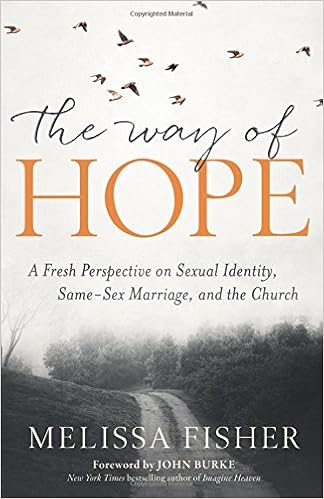
Book Review: The Way of Hope

The Way of Hope: A Fresh Perspective on Sexual Identity, Same-Sex Marriage, and the Church

My Rating – Must Read

Level – quick, easy read; short

Summary
The book is broken into 10 chapters, each more or less representing different phases in Fisher’s life story. Mostly written as an autobiography of her life and journey from fundamentalist church, through homosexual relationships and considering a sex change operation, back to church and struggling to understand it all. Woven throughout the book are suggestions on our response as a church to same-sex marriage and identity issues, based on things she has seen go right and go wrong.

Outside of the 10 chapters that are the core of the book, there is the typical intro and then, at the end (obviously), there is an epilogue that consist of three brief interviews with her mom, her dad, and her ex-wife that are really just incredible. She ask her mom when she suspected she was gay, talks to her dad about her parent’s divorce, and discusses the pain of her own infidelities with her ex-wife.

My Thoughts
Probably the only critical thing I have to say about this book is that the subtitle is wrong. For me, there was nothing in this book that offered a ‘fresh perspective’ on any of her topics. However, her more intended audience might be more of the fundamentalist, don’t discuss sexuality type people she describes in her book that made up her church, family, and small town.

Other than that, the book is great. Her writing style is fantastic – fasted-paced and kind of erratic, funny, and very open and honest. While she does quote quite a bit of scripture and state clearly that homosexual activity is wrong, that isn’t really the point of the book. She isn’t trying to convince anyone to change or offering a theological and biblical defense of the viewpoint from scripture. With the book being mostly about her mixed with her personal writing style, you, instead, feel like to get to know her.

Even more importantly, you get to understand where she is coming from, and, to the extent you can, what she went through. I think this is really the strength of the book. Proximity to issues changes your view, or at least your reaction to them. Extremely conservative Christians in rural areas or small towns, might not have many opportunities to engage with gay people. So, it is easier to ostracize, from a distance. The way she writes this book, someone could read it and start to feel that proximity. Someone could put a face on an issue and at least try to understand.

It is easy to just say, being gay is wrong, and you should chose that. Reading her story (or hearing someone else’s), you see it isn’t that simple. I hope that more people that have that view will read it and see the struggle that gay Christians have. That instead of judging and condemning, we need to love them and help (if we can) them in their struggle.

Finally, those last three interviews at the end were just crazy to me. Obviously, her mom was one of the those people who would rather cut off contact with a gay daughter, but they have since reconciled. Her ex-wife has also made it back into a church, one connected with the one fisher attends. The interviews alone make this book worth the price, add in the personal tone of her spiritual and emotional journey and changes and this is definitely a must read book.

Book Review: Choosing Donald Trump

Choosing Donald Trump: God, Anger, Hope, and Why Christian Conservatives Supported Him

My Rating – Must read

Level – Quick and easy, short book

Summary
The subtitle of the the book pretty much sums up what it is about. Conservative Christians were angry and put there hope a man Mansfield calls ‘an unlikely champion’. If fact that is the first section of the four sections of the book.

This first section has two short chapters about the (then) current political situation and how Trump fit into it. The second section, called ‘the backstory’, is basically a 65 page biography of Trump. The third section, ‘the appeal’, get to why Christians would even be interested in someone like Trump. This is probably the most informative section, with chapters on the Johnson Amendment, Obama, Hilary Clinton, and voters who felt like the found a political voice only in him. The final section, ‘Prophets and Presidents’, where Mansfield dives into the interaction of prophets with kings in the Old Testament and then contrast that with the pastors around Trump today.

The book also includes a short intro and epilogue and an interesting ‘Trump in his own words’ section which is a collection of a few of Trump’s speeches about religion.

My Thoughts
I wasn’t sure what his book was going to be when I saw it on the list from Baker*. I don’t know who Mansfield is or whether he is a supporter or not, and I thought the book might be a bit apologetic for Evangelicals. Instead, it really is just a straight look at the situation. He doesn’t try to paint Trump as the terrible person, nor does he try to portray him in this great light that would explain why Evangelicals could vote for him.

One of the more interesting aspects of the book was the detailing of Trump’s admiration of Evangelicals, or at least preachers. He is somewhat famous now for staying up late and watching cable news, but apparently 20 years ago he stayed up late watching TV preachers. He seems infatuated with their charisma and influence on people. You get the impression that his outreach to Evangelicals maybe wasn’t just a political move, but him actually trying to ‘do good’ so to speak. It was almost like his pushes for ‘religious liberty’ and repeal of the Johnson Amendment are his good works, his attempt to earn some salvation. Honestly, I felt like had Trump met a different strain of American Christianity first, he could just as easily gone a completely different way.

That is actually a really disappointing idea, as this particular charismatic/Pentecostal/fundamentalist strain doesn’t necessarily line up with what he personally believes, but they are on the TV the most, so he sought them. He asked them what he needed to do, and they laid out, at least, the religious wing of his agenda. I really believe that had it been the liberal side, he’d be pushing refugee resettlement and environmentalism, or the reformed side, maybe sex-trafficking and racial reconciliation. He might not have even run as a republican. Anyway, for now that is just an interesting exercise in alternative history.

The biographical part of the book was fascinating. Mansfield did a great job distilling 70 years of this man’s life into just why/how he reacted to the religious vote the way he did and how he doesn’t really fit. The early chapter about Trump’s speech at Liberty University and his commentary on that are great insights.

Finally, I enjoyed the last part of the book where he delves into the famous pastors who supported Trump, their hypocrisy as it came to his morality versus their previous statements about Bill Clinton, and then how the tripped all over themselves to either excuse his behavior or explain why it didn’t matter. There was an interesting survey of all the Old Testament and historical figures different pastors have compare with Trump.

If you are a huge Trump supporter and think he was chosen by God to be the perfect leader of the United States, this book may not be for you; unless you want to be challenged in your thinking. However, if you are opposed to Trump, or politically left, or maybe not opposed but just confused, like me, as to how he garnered so much Evangelical support, this book is a must read.

*I received a free copy of this book in exchange for an honest review.

Book Review: Trade Up

Trade Up: How to Move from Just Making Money to Making a Difference

My Rating – If you are looking for something

Level – Easy read, very short

Summary
I’m not entirely sure how to summarize this book, as I’m still not entirely sure what it is supposed to be. It is broken into three parts – My Journey, Your Journey, and The Destination. The first section is a brief autobiography, the second honestly just seems like some marketing points for his organization (Halftime Institute), and the last chapter has some interesting ‘actionable’ steps related to people who are looking at a life change. Well, I should say, some specific people, those that are rich and successful and whom are looking for what to do with the ‘second half’ of their life/career.

My Thoughts
I’m probably far too cynical than the publisher’s target audience for me to like this book. For one thing, I’m not rich or successful but instead a government (the worst kind) paper-pusher and part-time, pretend, internet theologian. I’m not an influence, nor are my circles large and powerful. I don’t know CEOs or professional athletes/musicians (though it has been said that Mrs. MMT has the voice of an angel). So, to be fair to the Niewolny/Baker Books, I was probably not going to get much from this anyway.

Neiwolny’s biography was almost too short and superficial to be of much value. Though, his passion for his organization and what they do is obvious, and that is always good to see. The middle section of the book seemed like some expounded talking points, or maybe a collection of speeches he’s made in his role as CEO of Halftime. For me, it was too motivational speaker-y, but I could see how it could get some people pumped.

The last part of the book is really what makes it worth it. It is short and reading is almost always worth it, but it is also practical. He lays out how to think/what to do if you are one of these people. However, I think it could actually be expanded. This section would be useful to retirees or some kind of second career empty-nester. I don’t think you have to be rich, but obviously being financially stable or even independent makes it easier to implement most of his steps. One of which, to his credit, he points out may be for you to stay at work. I think this is an often missed step for Christians, especially newer ones. Now, if you are big deal, Christian, and looking for a change, you should read this book and contact the Halftime people. Others, this could just be one of the many books/websites you check out. Overall, I recommend this book only if you are look for it.

*I received a free copy of this book in exchange for an honest review.

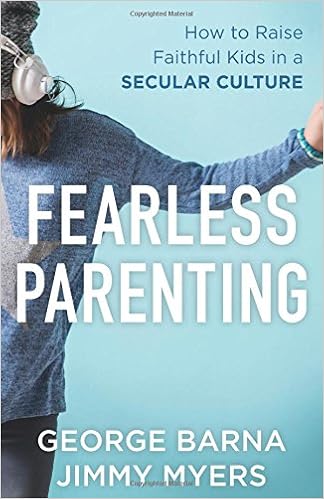
Book Review: Fearless Parenting

Fearless Parenting: How to Raise Faithful Kids in a Secular Culture

My Rating: Probably not worth your time

Level: Quick, easy read; short book.

Summary
The title of this book is a little strange. For the most part, the book is about Biblical parenting in a secular world (which is more or less what the subtitle says). The name comes from the second chapter, where the authors tell you to reject fear as your basis of parenting. That is all well and good, but the response in this chapter is in relation to the first chapter, which might be one of the worst examples of writing in any parenting book, ever. I’d highly recommend skipping the first chapter, if you have any plans on finishing the book.

The remainder of the book is pretty solid; with almost a completely different feel than the first chapter (as if there were two authors…). The first few chapters are general reminders and thoughts on parenting from a Christian perspective that should be familiar to most church-going families. Some of the topics covered later in the book include clothes, materialism, social media, and ‘screen-time’, and they all contain good, practical advise.  The one section where the book really does shine is in discussion of kid’s sports. In it, the author calls out parents who try to live vicariously through their children in sports and challenges parents to ramp down the amount of sports played and to not make them the number one priority in the life of your family. The section of the book was redeeming enough for me to not rate the book lower.

My Thoughts
I wanted to like this book more, but it was hard to get past the first chapter. In it, the author ‘projects’ what life make be like in 2030. Some of the ‘data’ points (such as rising crime, or Trump reducing/balancing the budget) are somewhere between disingenuous to out right lies. In case you decide to fact check (which I did), he heads you off by pointing out that if you think he is being ‘too political’ (or, what I’d call, maybe just being a complete political hack) it is because YOU, reader, are too politically correct. Along with misused data, the author also gives us an Orwellian tinged far right-wing dystopian fantasy; including the suggestion that new government agencies will be created and that pastors will have to submit their sermons/teaching for approval by the state.

Honestly, this first chapter is just embarrassing. It hurts me on two levels. First, as a Christian, it is embarrassing that this book is written by/for and published by Christians. I suppose the author may shrug it off and say, ‘this is just what could happen.’ However, his projections are based on neither facts nor anything to do with Christians. It is straight up far-right political (hackery?, propaganda? fantasy/nightmare? I can’t even come up with the right word for this). It reminds me of the chain email that went around (you probably got it from your mom or grandpa) 2008/2009 that claimed that Obama was the anti-christ and that Revelation said he would be a Muslim. Of course, the book of Revelation makes no such claim, and Islam would not be founded for a another couple of centuries. Overall, I think the first chapter could best be summed up as an email your grandmother would forward you because she is scarred. I think this is probably one of the biggest reasons why young people leave the church today. This is beyond the scope of a book review, but a generation ago, people left the mainline churches because they sounded like democratic party meetings, and now people are leaving evangelical churches because they sound like republican party meetings.

Second, this chapter was bad in it’s use of statistics. George Barna and I both have master’s degrees in City Planning, so I feel he should know better. Which leads me to another criticism of the book overall – with one of the authors being the head of a major polling/research group, the book was very lacking in data. I was interested in this book partly because I thought, with Barna being co-author, it would be data heavy. Then again, based on the first chapter, maybe that is for the best.

This has already gone on too long for a review, so I’ll wrap up quickly. The sections/chapters on social media and screen time offer some great guidelines and I appreciate anytime a parenting book (especially Christian focused) offers practical examples. The section materialism was impressively counter-cultural. It did a good job of calling parents out for their endless wants and purchases as a way of setting a poor example for our children. Finally, I was really impressed with the section on sports. This is something of a sacred cow in America, particularity for things like Baseball and Football (especially here in the South). It is an incredible challenge the author lays out, telling someone you may skip a tournament, or not enroll in a sport because it has games on Sunday. They do well in discussing the impact too many sports have on your family life (e.g. vacation time or even canceling vacations), on your children’s health, and, most convictingly, your own idols (vicarious living, or idol of parenting a sports star in think on how that reflects on you).

I haven’t seen a parenting book really reflect on sports to this extent before, and it almost makes the whole book worth reading. However, due mostly to the drag of that first chapter, I think this book is mostly not worth your time. If you are specifically looking for some guidelines on materialism, social media/screen use, and sports participation, it may be a worthwhile. However, you can probably find some decent guidelines for most of these online somewhere, or perhaps in other books.

*I received a free copy of this book in exchange for an honest review.

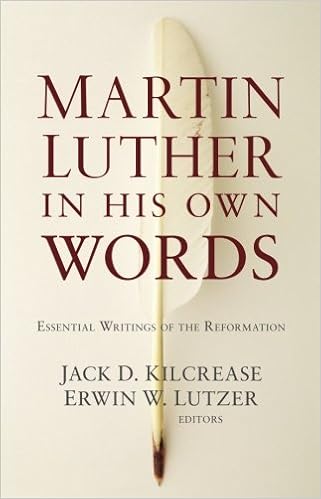
Book Review: Martin Luther in His Own Words

Martin Luther in His Own Words: Essential Writings of the Reformation

My Rating – If you are looking for something

Level – Short, but moderately difficult read. This isn’t an intro for the Reformation, some knowledge of church history and theology will be needed.

Summary
The title could be a bit misleading to some, i.e., one may think it is a sort of autobiography. However, the book is a collect of Martin Luther’s writings. Twelve selections, to be precise, broken into five broad topics (cleverly) modeled after the five solas – fida, gratia, scriptura, Christus, and gloria.

If you are unfamiliar, the five ‘solae’ (alone or only in Latin, think of the modern words sole and solo) was the cry of the Reformation. So the chapters are laid out in the Latin words mentioned above that correspond to faith, grace, Scripture, Christ, glory (to God). Delving into these is beyond the scope of a book review, but as this year (2017) is the 500 anniversary of the Reformation and Martin Luther was the initiator, it was a pretty interesting way to divide the book.

There is an into by Kilcrease before each selection that helps with context and there are a few footnotes within the selections that are helpful for understanding particular, archaic, and/or theological/ecclesiastical terms.

My Thoughts
There is a difficultly in trying to review a sample pack of a book. My main critique would be that Luther’s most famous writings are probably ‘The Bondage of the Will’ and his Larger & Short Catechisms, and if you know much about him, his commentary on Galatians, and of the 12 selections, only four come from sources other than these. Granted, this may have been their reason for the selections, but I would have preferred a more diverse grouping.

I wanted to like this book more, but maybe because I am fairly familiar with Luther, it just didn’t quite do it for me. However, if you do not know much about Luther’s writings or the beginnings of the Reformation, this may be a great place to start. Kilcrease’s introductions are great and very informative. Or, if you are curious about Luther’s writings and don’t know where to begin, this would be a great place to start. If you haven’t read much, the translation footnotes are incredibly helpful and will make it an easier read the just pulling some of the freely available online versions of many of his writings.

There is renewed interest in Luther and the Reformation in general this year as we approach the 500th anniversary and this book is one to read, if you are looking for something.

If you were looking for a biography then check out Here I Stand: A Life of Martin Luther. I haven’t read it yet, but the general consensus seems to be that it is the best.

If you think this book sounds a little to introductory, or you’ve read it and want more of Luther, then this collection (which I have read) seems to be the best next step (there is some overlap) – The Martin Luther Collection: 15 Classic Works

*I received a free copy of this book from the publisher in exchange for an honest review.

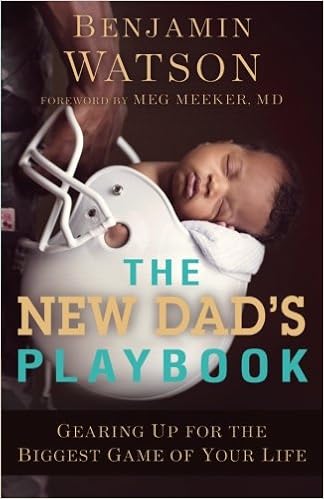
Book Review: The New Dad’s Playbook

The New Dad’s Playbook: Gearing Up for the Biggest Game of Your Life

Rating – Put it on your list

Level – Quick and easy

Summary
The book is basically what it says it is – a guide to fatherhood – just (sometimes too) heavily mixed with football metaphors. The book is 14 chapters broken into five parts, all based on a football season – training camp, regular season (pregnancy), super bowl (birth), postgame, and off-season(dad things, have another child). The attempt to put everything neatly into these categorise can be a bit of a stretch, especially in the ‘training camp’ section, but actually work out really nicely in ‘regular season’ and ‘post game.’

My Thoughts
This book turned out better than I thought. I was little skeptical at the beginning, with the intro chapter somewhat meandering, but Watson really got into stride with the practical advice. As mentioned above, training camp was probably the weakest, but I have to say, I was really surprised at how well the ‘regular season’ chapter turned out. It was a great pregnancy 101. Watson actually goes through the different terminology, stages of pregnancy, and medical options defining and explaining in quick and simple terms what they mean. Maybe it is because Baker is a ‘Christian’ publisher (who typically aren’t great a practical advise), but I was surprised at how useful and practical this section was.

‘Postgame’ and ‘Off-season’ where also good chapters, where he moves away from practical advice (in the step-by-step, playbook sense) and honestly moves into challenging men. Basically saying we need to step up for our family, work to keep the marriage strong, and then realize we will fail, regardless, and that it is alright, because you can’t be a perfect dad. To wrap-up and really expand the breadth of the parenting aspects, he ends on a solid discussion on what it means to have another child, and even differing thoughts on how long to wait and how many children to have.

For those skeptical that you can find a practical (pre)parenting book from a CHristian publisher, this one is the exception. For those maybe interested due him being a famous football player, but disinterested in the CHristian-y parts, I think it is still a solid option. The intent of the book is to be practical and helpful, he isn’t kidding with the ‘playbook’ part of the title. However, it is clear that the man loves God. He obviously takes his relationship with God, his wife, and his children very seriously. It was encouraging and convicting at the same time.

Any pre-dad should have a number of books and resources in mind, and this is definitely one to put on your list. If you have a friend that doesn’t like reading and might only read a book because it was written by a football player (and you probably know a few), this book is perfect. I can think of a guy right now whose wife is almost through the first trimester that I will give this book to. The practical advice, the sports references, and the quick and easy pace of the read will make this book one that anyone will finish.

* I received a free copy of this book in exchange for an honest review.

**You still have time to order this book and give it to a pre-dad as a father’s day gift, should you be so inclined.

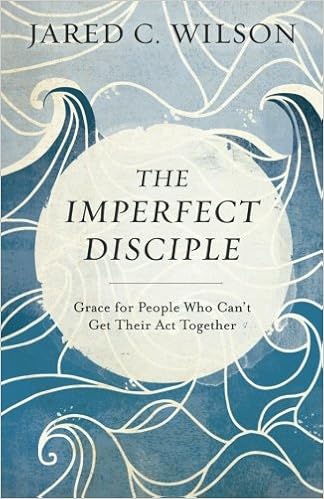
Book Review: The Imperfect Disciple

The Imperfect Disciple: Grace for People Who Can’t Get Their Act Together

My Rate – Must Read

Level – Fairly easy, short to moderate length.

Summary
A book about how to be a disciple written by someone who apparently isn’t very good at it. As usual, I don’t have a very good summary of what this book is about. The best summary of the books is right there as the subtitle – grace for people who can’t get their act together. I don’t know how to add to that. There are 10 chapters (20ish pages each) with a short introduction and even shorter conclusion.

My Thoughts
This is what a book about discipleship should be. This might be the best book I’ve read this year, certainly the best ‘Christian’ book of the year, probably the best in a while. I was given a copy of this book to review, but I may actually go buy a few more to hand out. So, what makes it so good? Was there anything revolutionary in this book for me? Honestly, no. There was almost nothing new and different for me, other than a growing jealously of his writing style.

Why would I want more copies of this book then? Because it is the best book to give out to people who ‘try’ hard to be ‘good’. I resonated deeply with his background, in the fundamentalist/moralistic sects of the baptist world. It probably took me until my 20’s to really understand Grace and the Gospel. To his subtitle, I already know I don’t have together and never will, and understand that this is the need for grace. However, there are so many people who don’t yet know this. Wilson is a master at saying what needs to be said in a way that will be heard by those who need to hear. He writes with the obliviously well worn heart of a pastor who has seen people burn themselves out or tear themselves down.

Buy this book for a new believer. Buy this book for the old believer you know who is always trying to ‘be’ better and is confused as to why they can’t. Buy this book if you disciple anyone, or lead any small group. Buy this book if you work with youth or college students. Buy this book for anyone new to the Biblical concept of Grace. Finally, go ahead and get if for yourself. It is a fun, enlightening read. I just pulled up amazon and it is less than $9. Admit it to yourself, that is less than you spent last time you went to one of those weight your ice cream places.

I rarely ever hold pages, or underline/make notes in non-academic books (things other than commentaries or systematics), but I just flipped back through this and found 15 dogeared pages. Maybe the most surprising is how broad they are, everything from what it means to be a disciple with examples from Isaiah, to issues with American Christianity and consumerism, to depression and struggling with your faith, and coincidentally to me as I am studying this right now – some good teaching from the Sermon on the Mount.

This book really is a go to book for what it means to be a disciple and a must read for anyone interested in the topic of being a follower of Jesus. The depth of the theology and pastoral messaging was incredible, while at the same time the book was funny and honest. He writes the way a non-pretend theologian blogger would write if he were to write a book.

* I received a free copy of this book in exchange for an honest review.