Book Review: The Imperfect Disciple

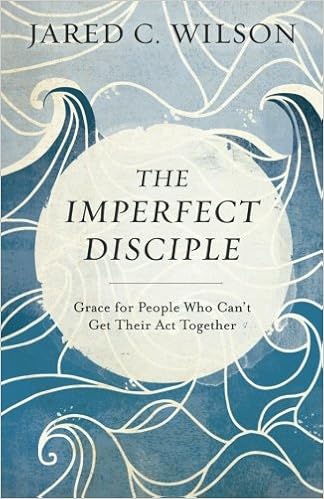
The Imperfect Disciple: Grace for People Who Can’t Get Their Act Together

My Rate – Must Read

Level – Fairly easy, short to moderate length.

Summary
A book about how to be a disciple written by someone who apparently isn’t very good at it. As usual, I don’t have a very good summary of what this book is about. The best summary of the books is right there as the subtitle – grace for people who can’t get their act together. I don’t know how to add to that. There are 10 chapters (20ish pages each) with a short introduction and even shorter conclusion.

My Thoughts
This is what a book about discipleship should be. This might be the best book I’ve read this year, certainly the best ‘Christian’ book of the year, probably the best in a while. I was given a copy of this book to review, but I may actually go buy a few more to hand out. So, what makes it so good? Was there anything revolutionary in this book for me? Honestly, no. There was almost nothing new and different for me, other than a growing jealously of his writing style.

Why would I want more copies of this book then? Because it is the best book to give out to people who ‘try’ hard to be ‘good’. I resonated deeply with his background, in the fundamentalist/moralistic sects of the baptist world. It probably took me until my 20’s to really understand Grace and the Gospel. To his subtitle, I already know I don’t have together and never will, and understand that this is the need for grace. However, there are so many people who don’t yet know this. Wilson is a master at saying what needs to be said in a way that will be heard by those who need to hear. He writes with the obliviously well worn heart of a pastor who has seen people burn themselves out or tear themselves down.

Buy this book for a new believer. Buy this book for the old believer you know who is always trying to ‘be’ better and is confused as to why they can’t. Buy this book if you disciple anyone, or lead any small group. Buy this book if you work with youth or college students. Buy this book for anyone new to the Biblical concept of Grace. Finally, go ahead and get if for yourself. It is a fun, enlightening read. I just pulled up amazon and it is less than $9. Admit it to yourself, that is less than you spent last time you went to one of those weight your ice cream places.

I rarely ever hold pages, or underline/make notes in non-academic books (things other than commentaries or systematics), but I just flipped back through this and found 15 dogeared pages. Maybe the most surprising is how broad they are, everything from what it means to be a disciple with examples from Isaiah, to issues with American Christianity and consumerism, to depression and struggling with your faith, and coincidentally to me as I am studying this right now – some good teaching from the Sermon on the Mount.

This book really is a go to book for what it means to be a disciple and a must read for anyone interested in the topic of being a follower of Jesus. The depth of the theology and pastoral messaging was incredible, while at the same time the book was funny and honest. He writes the way a non-pretend theologian blogger would write if he were to write a book.

* I received a free copy of this book in exchange for an honest review.
Book Review: Katharine and Martin Luther

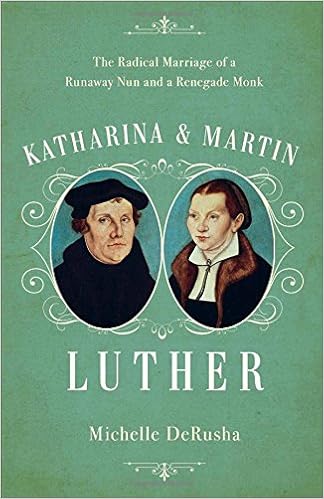
Katharina and Martin Luther: The Radical Marriage of a Runaway Nun and a Renegade Monk

Rating –  If you have time

Level – Easy read, short to medium length

Summary
For the most part the book is about the marriage of Katharina and Marin Luther. The first few chapters look at the two of them individually, then their life together, culminating in the death of Martin. The book is at its best, not necessarily discussion their marriage, but when getting into the minutia of life in the early modern period. The book is at it’s worst when the author seems surprised by the fact that life was hard for women 500 years ago.

If you are looking for an interesting book about the marriage between a former monk and former nun, this is probably not it. There are interesting insights, but it is far from a good history, there is a good bit of editorializing and comparing them to marriages of today. There is a little bit about the famous Table Talks and their life together mentoring and growing the next generation of reformers, but not nearly enough. In my view, this should be the centerpiece of a book about their marriage. It truly was revolutionary, but the author instead focuses her surprise on the fact that Martin loved and respected Katharina despite believing the Bible to the the Work of God.

My Thoughts
It should be pretty clear from above that I was a little disappointed in this book. The author goes in and out of interesting historical facts to discussing her shock that someone could read the Bible, believe it, especially as it pertains to the so-called ‘roles of marriage’ and then still love their wife. She starts with a good history of the issues women face, and they are shocking and substantial, but she doesn’t seem to be able to separate them from their place in history and our current time. She anachronistically puts modern views into the history of the early modern period.

Katharina and Martin hosted dignitaries, students, pastors, and leading intellectuals of the time from across Germany and other parts of Europe. She really misses out in this book by not getting into more of those conversations and how they related to each other. She also comes off a bit patronizing, unintentionally, to Katharina. She takes minor quips and solid comebacks and conflates them into great iconoclastic events.

Overall the book seems a bit jumbled, shifting focus too often. There is far too many uses of phrases like, ‘one wonders’ and ‘it’s not hard to guess’ for my liking. To be fair, in her defense, she never claims to be a historian or that this book is a definitive biography of historical discussion on their marriage. Her near unending shock that there are many letters retained from possibly the most famous and impactful European in church history greatly outnumber his wife’s letters in a time when most women (or people for that matter) could not even read, gets old quickly.  I guess if you happen across this book at a good price it could be worth while, but over all, it is probably not worth your time.

*I received a free copy of this book in exchange for an honest review. See more here.

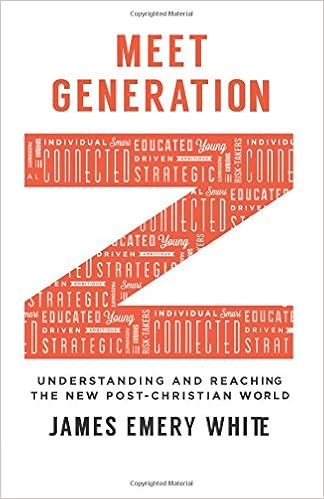
Book Review: Generation Z

Meet Generation Z: Understanding and Reaching the New Post-Christian World

Rating – Put it on your list

Level – Pretty easy ready, goes quickly, about 200 pages.

Summary
The book is exactly what it sounds like, and introduction to Generation Z, who he defines as those born between 1993 and 2012, how they will be different form previous generations and what the churches needs to do about it.

The book is broken into two parts, plus a pretty extensive appendices. The first part is focused on the Zs and the second on the difference and the churches new approach. The focus is mostly on the changing demographic of Zs, they are less white, more multiethnic, more liberal (economically and socially), and less Christian. White does a good job explaining the way technology is changing their lives, especially as it relates to early sexualization and porn.

My Thoughts
I think White does a good job of not being alarmist. It is a fact of history that the next generation will be our undoing, people have been saying it for thousands of years. So, it was good to read him taking a measured approach. There is a lot of media hype over the ‘nones’, and he explores how it is possible that a middle group who could go either way on the church is now siding with the no-religion group because it is the more socially advantageous position as it is more of the culture norm (the same way the opposite was true 50 years ago and through most of American history). I’ll add two reason I think the ‘nones’ are overblown, one it is cool now to be ‘independent’, we see it with political parties. I see it in church going people who are very devout, they like to say that they don’t like names or denominations. This is already a bit of a tangent, but second, I’ve worked with detailed surveys throughout my career. People are bad at them. You can look at the polling data and see that 9% of self-identified Atheist are certain there is a god when asked. I think it is something like 14% when the question is asked of self-identified Agnostics. Likewise, there are a number of self-identified Christians who say it is impossible to know if God exist. Due to this, I do think church attendance will continue dropping with the Zs and whatever comes next, but the core of the devout won’t change too much.

I like his definition of Z better than some of the others I’ve seen. Other have them starting in 2000 or even as late as 2005, and I think his focus works a little better. More importantly, there is a difference between them and the millennials, just as there was between X and boomers, and SIlent and Greatest before them. The first half of this book is good for anyone looking for a brief primer on the upcoming generation. The book as a whole is important for Christians to understand the changes that are coming, especially pastors and youth workers. Anyone in this latter group should make reading this book a priority.

*I received this book for free in exchange for an honest review. See more here.