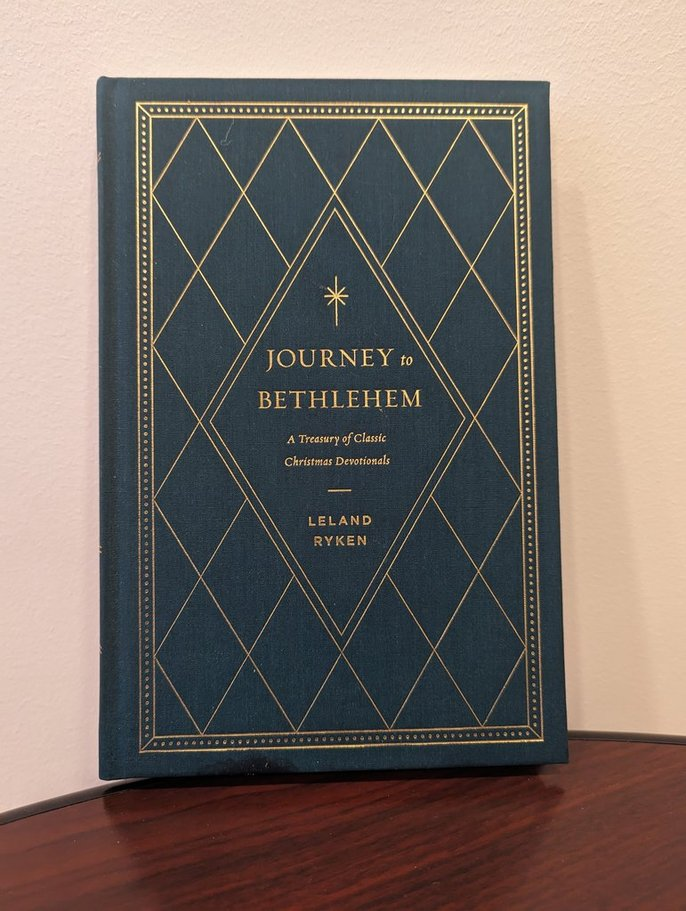
Book Review: Journey to Bethlehem

Rating: Put it on your list

Level: Easy, Short (5ish minutes a day/30 days)

Summary

In some ways, this is a typical 30-day devotional, with a section to read, then reflection, etc. However, I think Ryken has done something unique in his choices. It is easy to find a 30-50 day devotional that has writings from numerous authors in the past, but Ryken has only reserved 10 of the days to pure thoughts of others, the remainder of the days are reflections on hymns or poems. 

The book is broken into three sections, the first being Hymns, then what he calls ‘Classic Prose Devotionals’, and finally Poems. Each day follows the same format – the text (e.g. Joy to the World, an excerpt from On The Incarnation, The Magnificat), then a commentary/reflection, then a brief ‘devotional takeaway’, before a final note and word of scripture. There is also a short intro into each of the three sections. Finally, what he calls ‘notes’ which is essentially a bibliography, if you want to find more info, as well as two indexes – one for the people in the book, another referenced scripture. 

My Thoughts

I’ll start with the only thing I didn’t like, and that was the choice of categories. Choosing Hymns and then Poems, is too similar to me (he acknowledges as much in his into to Hymns, stating, ‘Every Hymn begins its life as a poem.’ That is very minor and nit-picky, maybe I just like symmetry too much, but I wonder if the book would have been better off as just hymns/songs/poems. 

Other than that, the book is great, it should be on everyone’ s list/rotation to read around Advent/Christmas. Ryken is a great write, and maybe an even better editor. I really appreciate the summary takeaway and then ending with scripture. His choices for each day are interesting and spread out (there are so many options), but there are plenty you will be familiar with, while adding some that may be new.

I knew six of the Hymns (and four are probably one everyone sang at a Christmas Eve service), the Prose included big names (Calvin, Luther, Augustine) but then other maybe not everyone has heard of (Bernard of Clairvaux, Spurgeon, Athanasius). Interestingly, he added the Nicene Creed to this section, which I really enjoyed. Similarly, the Poems included works of Chesterton, Milton, and Eliot, but I didn’t know any of the others. Except he put the Magnificat in this section, which was a good and interesting point to make. If you aren’t familiar with that name, it is the historic name for the section in Luke 1:46-55w here Mary responds to Gabriel after being told she will give birth to Jesus (it also kind of answer the question Mary Did You Know?, but I’m not trying to start a fight a Christmas). 

Overall, I highly recommend this book, the devotions are short enough to fit into a busy time and his choices of authors and especially hymns/poems makes it interesting and different enough compared to the so many other great and traditional ones out there. So, if you didn’t get to a devotional reading this past December or you did and are looking for something different next year, this is a book to put on your list. 

*I received a free copy of the book in exchange for an honest review
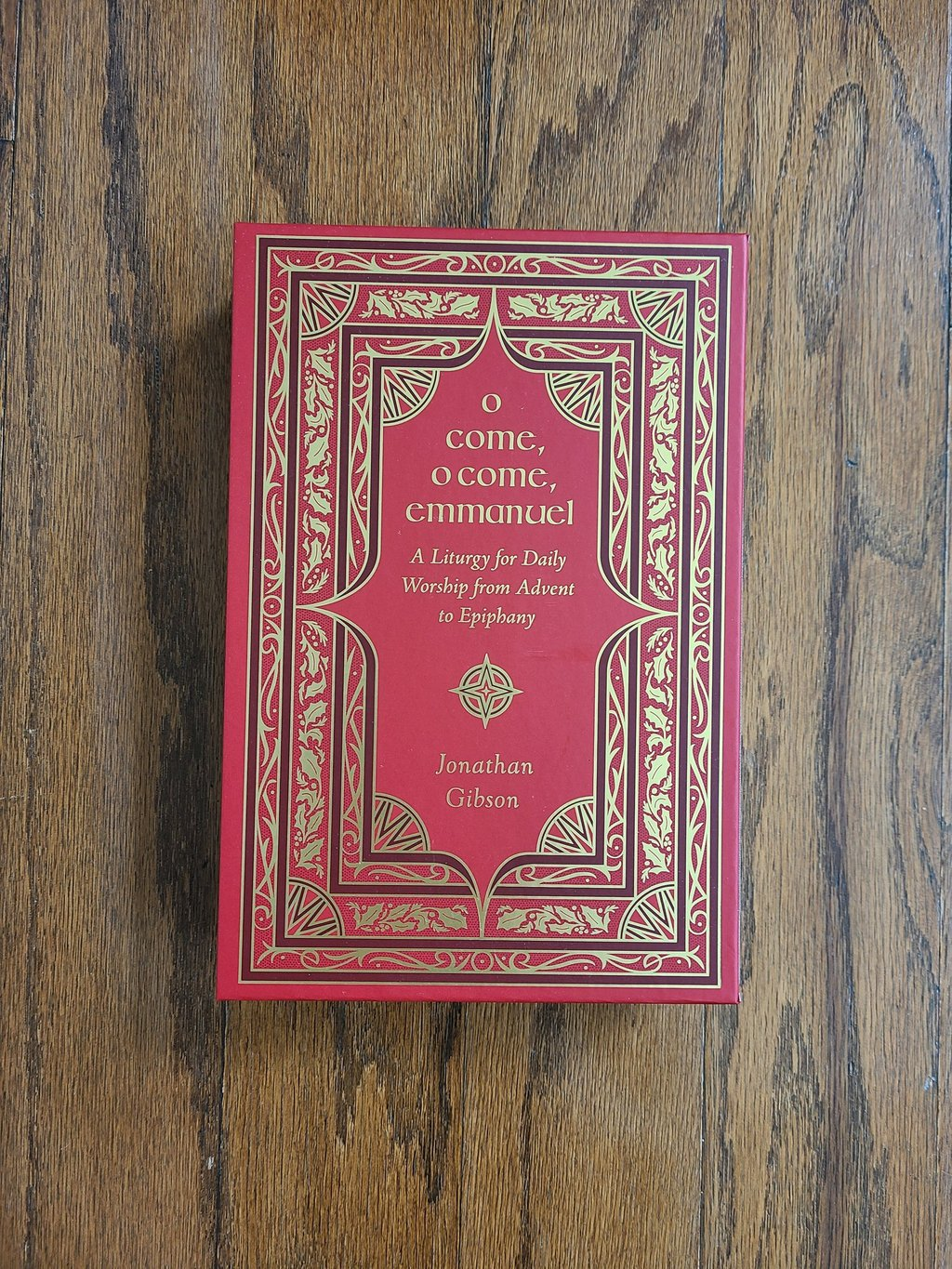
Book Review: O Come, O Come, Emmanuel

Rating: Must Have

Level: Easy (though helpful to have familiarity with liturgy); Long (400+), but each day is less than 10 pages

Summary

This is another outstanding book by Gibson and Crossway, similar to Be Thou My Vision, but this one being focused on Advent, Christmas, and ends on Epiphany. For those unfamiliar, that is January 6th, so to have a round number of 40 days, it may start before ‘official’ Advent. That was the case this year, Advent started yesterday (which is late in the chronological Calendar), and the book starts on November 28th, which was last Tuesday. 

After a preface and acknowledgements, the books starts with an intro (titled Waiting For Jesus), where Gibson explains his reasons/hopes for this book. The following chapter is a very useful (especially if you aren’t used to Liturgy) ‘how-to’ on using the format, which includes: meditation, call to worship, adoration, reading the Law, confession of sin, assurance of pardon, creed, praise, catechism, prayer for illumination, scripture reading, praise, prayer of intercession (and then further petition/prayer), Lord’s Prayer, benediction, and finally a postlude (doxology).  

There are also appendixes for tunes to various parts of the worship, Bible reading plan, and Author, Hymn, & Liturgy index.

My Thoughts

Honestly, if you attempt any personal or family worship this is a must have. I am a big fan of the structured (liturgical) worship, especially for family devotion. It really doesn’t make it easy to lead or do with your family or community. Really my only (minor) quibble with this is that with 16 parts, it might be just a little too long. However, if you are doing this with a family with young children or you find yourself short on time, there are always parts you can cut. That being said, some sections are only a line or a paragraph long; this shouldn’t take an hour or any extended time. 

If you are unfamiliar with liturgy or structured daily worship this is an outstanding way to get into it. Unless you are from a pretty free-flowing Baptist/non-denom/mega-church background you will probably recognize parts (if not all) of these sections. If you are Anglican, you can see the clear influence of the BCP (which is probably the best book that exist for personal and family worship). 

I know some people don’t like the repetitive nature of some parts of guides like these, saying and can be rote or unfeeling, but really that is up to you. If you don’t take it seriously, or just mindlessly repeat things, then yes, the downside is that it can be meaningless. However, the upsides are a daily reminder of how to worship God, what He has done for us, what so much of the church today and most have always believed and recited, and of course – scripture reading. This is more important than every in church life, especially if you do this as a family/community and use it to help shape and guide children in their beliefs. This is true of any structured worship, but I think is even more important for this time of year, when we are pulled away in so many directions, with so many competing interesting. As I said above, if you are looking for personal/family devotion/worship, this is a must have. 

*I received a free copy of this book from Crossway, in exchange for an honest review. 

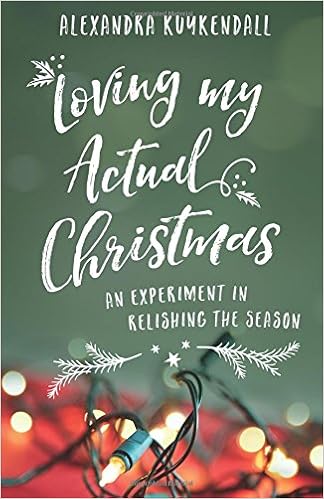
Book Review: Loving My Actual Christmas


Loving My Actual Christmas: An Experiment in Relishing the Season

My Rating – If you are looking for something

Level – Short, easy book

Summary
I think the best summary of this book comes from the subtitle of the intro chapter – A Recalibrating of the Season. That would be the Christmas and Advent seasons, both the secular and Christian aspects. Her goal in writing this is to help people get past the over commercialized, hectic and stressful parts of the American Christmas season. She advocates doing an Advent devotional/study to help ground you in the Christian aspect.

So much so, that the majority of the book is her going through the four weeks of advent, what she did that week in actual life and what she did as far as reading, studying, and being thankful.

She finishes up the book with a conclusion that is about half as long as the entire book, because there are so many sub parts – scheduling, finances, relationships, and logistics. This is where the book takes a turn from reflection to more practical tips.

My Thoughts
I wasn’t really a fan of this book, not because it is poorly written or has a bad message or anything of that nature. The main issue – I’m quite far from the target audience. She is one of these busy Christian women with four or five kids that is heavily involved with a number of things and is constantly stressed. I’m a father of one, and overall pretty chill guy. I don’t really relate to the pressure and stress of mom bloggers with multiple active kids.

If that is you, then this will probably be a great book to help ground you for the holidays. Another thing I didn’t know when I requested this book, it is a spin off of her other book – Loving My Actual Life: An Experiment in Relishing What’s Right in Front of Me. So, to be fair to the author, had I known about this book, I would have known more about her writing and audience and likely wouldn’t have requested this book. However, judging by the other reviews, had you read that book and enjoyed it, then you will also like this book.

I thought her reflections on the Advent devotional were interesting, and more importantly, it will help introduce some people to the concept of Advent. Most American Evangelical churches do not use a liturgical calendar, which can be very helpful in keeping your mind focused on Christ throughout the year. So if nothing else, if readers decide to start an advent devotion for themselves or a tradition with the whole family from reading this book, then it will have been a great success.

Finally, her concluding thoughts were very practical and useful. If you are the target audience, they are also probably pretty helpful in reminding you not to go to wild and over-schedule yourself too much, both time-wise and financially. Overall, if you fit in this category and are looking for something on the topic of handling the season, this is probably a good book for you.

*I received a free copy of this book in exchange for an honest review.