Book Review: Trout Bum

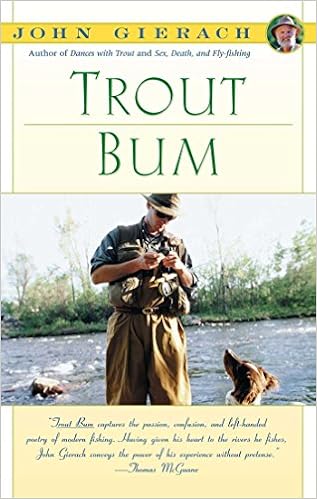
Trout Bum – John Gierach

My Rating – Put it on the list (if you are a fishermen; if not, pass)

Level – Short, easy, requires some familiarity with fly fishing.

Summary
It is hard to summarize this book. Basically it’s just a guy writing a few short essays/stories, roughly grouped together in broad categories. It is a pre-internet blog, edited and published, roughly 30 years ago. Categories include things like: Bass Pond, Fly Collection, Cane Rods, Adams Hatch, etc.

My Thoughts
Gierach is an entertaining writer, who tells good stories and does so humorously. As a writer, he is essentially a full time fisherman/fly-tier and therefor seemingly has more good stories than I feel I will have in a lifetime. Anyone who has spent at least a moderate amount of time fly-fishing will enjoy this book, especially as he gives the types of people to avoid a fishing trip with or how to make the best camp coffee. If you’ve never fished or don’t intend to again, I’m not sure why you bought this book, but I doubt you’ll like it. Any other fishermen, fly-tiers, maybe even just people who great enjoy the outdoors and like well written, funny stories, this is a book you should put on your list.

August Biblical Studies Carnival

When Phil first contacted me about hosting a Biblical Studies Carnival, I expected him to ask for a credit card number or tell me about his friend, a Nigerian prince. I hadn’t come across a Carnival yet, though I had seen (and even followed) most of the blogs/posts that were featured in the series. After checking it out, I became excited to host.I still have no idea what I'm doing.

While most hosts are professors or PhD students, I’m more of a pretend theologian. I’m also someone who’s closer to a book reviewer than a BiblioBlogger. And so this Carnival might be a bit different than what you’re used to reading.

If you are interested in hosting, almost all of 2017 is open, simply contact Phil. Check out last month’s carnival, and look for the upcoming hosts:


Biblical Studies
James offers some short thoughts on the problems with YEC.

If you like Young Earth, there’s great fun for you at Noah’s Ark.jesus-dinosaur1

Related, Peter Enns on getting the Noah Story correct.

Craig asks why Genesis 36 is about Esau.

Bob explains his thoughts on reviewing the ‘raw data’ of the Old Testament. He also shot me one just under the wire look at Isaiah 38.

Cluade Mariottini writes that Judges 19 might be one of the most misunderstood verses in the Bible.

Interesting article about the Chinese church and interpreting the Old Testament. Beware, this is a wall of text.

Phil gives us an intro into 4 Ezra, look also for his write-ups on the seven visions of Ezra.

Jeff thinks that maybe Jesus was a rude dinner guest.

Reasons why 1 Timothy is not so simple to translate.

Ethics in Mathew, James, 1 Peter.

R. Scott Clark provides commentary on 1 Peter 5:1-5.

Peter Gurry with some thoughts on the textual variances in Revelation 2:13.

The Bible is not a book of promises.

RJS say literal reading, please, depending on what you mean by literal.

Will Brown has some info on the Apocalypse of Adam, which I didn’t even know was a thing.

Church History/Historical Theology/Theology
St. Patrick had mixed manuscripts based on his use of the Great Commission.

Reflections by Ken offers short bios, with sweet infographics, on Luther, Calvin, and Irenaeus.
How Hell Started
Beck has a few thoughts on the origins of Hell.

Matt Emerson notes an issue with the Vincentian Rule and Christ descending into Hell.


Book Reviews
Phil reviews Engaging the Septuagint.

Jennifer reviews the Cultural Background Study Bible, concluding that it is a great resource for people lacking in historical/ANE Worldview knowledge.

Scott McKnight reviews The Charity: A place for the Poor in the Biblical Traditions.

Michael C. Thompson reviews Pax Romona: War, Peace, and Conquest in the Roman World.

Chris Stump interviews the author/reviews Earth Science: God’s World, Our Home. (Yep, that’s a textbook. I’ve added a review of a middle school textbook to the Carnival.)

Pete Enns reviews The Early History of God: Yahweh and the Other Deities in Ancient Israel.

Lindsay reviews Progressive Covenantalism.

Jill Firth reviews the Book of Genesis from the Bible in Medieval Tradition series.

John reviews Finding God in the Waves: How I lost My Faith and Found it Again Through Science. Great quote from the article-

But this book will not appeal to most orthodox believers. It is not a simplistic de-conversion/conversion story—the spiritual equivalence of boy loses girl, boy gets girl back. It’s a lot messier than that—more like boy gets girl back…but discovers he’s also got an STD.

Not quite a book review, more of a preview of an upcoming book on Augustine.

Also not quite a book review, but the author guest-posting about his book Q in Matthew.

I guess I can shamelessly plug my review of the second edition of Four Views on Hell.

Calvin reviews a book by Servetus.

Misc
Karl Barth was not a fan of the Olympics, or sports in general, it seems.

American JesusMcKnight on what Grudem should have said.

Some new research out from LifeWay has some surprising results.

A new card game, The Cannon, is coming soon, in case you need to have fewer friends.

Finally, a fellow Atlien reminds us of the importance of a well-worn Bible.


Alright, that concludes the August 2016 Biblical Studies Carnival. Casual Friday KevinHopefully, I didn’t veer too far off track or ruin anything (as occasionally happens when I get involved). It was certainly an interesting task to host one of these. I found many really cool articles (sorry, I couldn’t post them all) and discovered great sites that I had never come across. Sorry if I misspelled your name or misrepresented your articles. All errors are those of my editor. Thank you so much to those who sent me articles to post. Thanks for playing along.
Reminder if you’d like to host anytime in 2017, contact Phil (twitter or email – plong42@gmail.com). It is an interesting challenge. Do it. I know there are more BiblioBloggers out there. 

Book Review: Four Views on Hell

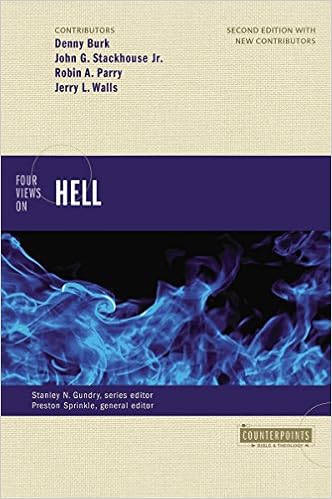
Four Views on Hell: Second Edition (Counterpoints: Bible and Theology)


As you know, I’m a big fan of the Counterpoint series, and I had (somewhat) recently purchased the Four Views on hell. However, recently I saw the updated second edition on Netgalley. This review is for the second edition. After I read the original, I’ll make a few comments on it as well.

My Rating -Put it on the list

Level – Medium length, get’s mildly technical, but overall fairly easy.

Summary
As the title say, the book argues four thoughts on hell. Well, really it is three views of hell, and another who goes on a tangent. All authors believe that hell is real, that it is punishment, and that it is the place that those whom die without the knowledge of Christ are destined to go.

Denny Burk argues for the ‘traditional’ view of hell, i.e., that it is a place of eternal punishment. John G. Stackhouse, Jr. argues for ‘annihilationism’ or that those punished in hell will eventually destroyed. They will cease to exist and therefore not receive eternal punishment. Robin A. Perry argues for a Christian Universalism, a term I’m more familiar with is universal reconciliation – that Christ will eventually reconcile all to him, even those in hell. Jerry L. Walls also takes what he calls the ‘traditional’ view, which is purgatory. As far as hell goes, he more or less aligns with Burk, in that it is everlasting conscious torment, but that few people will eventually end up there. Most will end up in purgatory, and then head to heaven.

Eternal punishment is probably the most widespread belief among Christians today and throughout history. Burk’s basic argument is that God’s goodness is so infinite compared to us, that our sin (against God) likewise needs to be punished infinitely.  Burk makes strong arguments, but where he really shines is in his responses to the other authors.

Annihilationism, as Stackhouse points out, dates back as far as the early church fathers, including Origen. He basic premise is that through Christ, we have eternal life, but in sin, we only have death and destruction. Stackhouse probably uses the most Biblical proofs for his argument including the ‘Lake of Fire’ in Revelation.

Universalism seems to be more based on hope than on extensive Biblical texts. The idea that God saves even those in hell and that all will eventually be saved is something all Christians should hope for. I certainly do, I just do not see it in the Bible. He focuses most on the morality of eternal punishment (or how it isn’t) and the verses that say things such as, ‘takes away the sins of the world.’

Purgatory is an interesting chapter. Walls believes in eternal torment, but that most will not experience it. Instead, they will go to purgatory and then enter heaven. He argues, somewhat convincingly, that purgatory is the only answer to questions the Bible leaves open about what happens after death and beliefs in heaven and hell. The chapter is a good primer on Purgatory, but as you read it, as well as his response articles, you are left wondering, ‘why are you here?’ He seems to be only tangentially related and possibly should have been in a different book all together. Maybe something about what happens after death, or even one on heaven, or something along those lines. This is really more on the editors, but he does seem out of place.

My Thoughts
As I said earlier, I hope for universal reconciliation. I just do not think it is the case. I generally land somewhere in between (or rather, go back and forth) eternal punishment and annihilationism, often more to the latter as I see more Biblical support for the idea. I won’t list this as a must read, due to the tangent on purgatory, but for anyone willing to challenge themselves and learn about the different views on Hell, this is a book you should put on your list.


Professional ReaderI received a free copy of this book in exchange for an honest review.

Book Review: The Hitchhiker’s Guide to the Galaxy

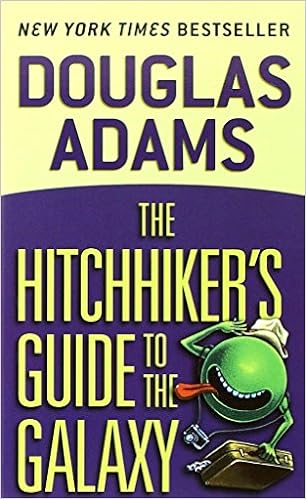
The Hitchhiker’s Guide to the Galaxy – Douglas Adams

My Rating – If You Are Looking for Something

Level – Quick, easy read

Summary
Arthur Dent is trying to stop bulldozers from demolishing his house when his friend Ford Perfect stops by and convinces him to go to the pub instead. Perfect then finds out that the entire planet Earth is about to be destroyed. Turns out Perfect is a writer for the Hitchhiker’s Guide to the Universe. This means he was able to save them two of them by catching a lift before the planet was destroyed. They then begin a journey of mishaps and characters, including the Galaxy President.

My Thoughts
This book is extremely popular, but I just couldn’t get quite into it. It is the opening book of a series, but I doubt I will continue on. Adams style is fast paced and laced with jokes and puns. It is entertaining enough, something just didn’t sit right with me. It’s gets a little trippy there towards the end, which belies it’s conception in the late 70s.

As a city planner, I did appreciate the first bulldozer crew telling Dent that there had been a meeting, he must have just missed it, that decided to demolish his home for a highway. The once on board the spaceship, Dent and Perfect are told that Earth is being destroyed for a highway and that there was a meeting they must have missed.

Also, all I could picture for Zaphod Beeblebrox was Zapp Brannigen. So much so that I assumed maybe the latter was based on the former, but apparently not. Perhaps that made it a little more entertaining for me. I’d say if you are looking for something to read, maybe on the beach for at the airport/on the plane, this is probably a good choice. It is short, simple and kind of goofy, and if you end up liking it more than I did, you can look forward to four or five more books.

Reading Guide to Hosea 3

I am continuing on with my series on reading the minor prophets. See my cheat sheet for the minor prophets, Intro to HoseaHosea 1, and Hosea 2. My recommended way to use this guide is to go read Hosea 3, come back here look through the post, then basically read them side by side, reading through the verse and checking here if there is something you find confusing.

This is a short chapter, but 4 is long and I had planned to have something up yesterday, so I’ll stick with just 3 for now. It is an odd chapter, with many strange phrases and old language/measurements. Plus, James Montgomery Boice calls this the greatest chapter in the Bible. So, no pressure.

Chapter 3
First off, who are we talk about here? Is the focus on ‘again‘ as in returning to Gomer or is it another adulterous wife? Boice and the NAC tend to lean to the former, while Tyndale and WBC say no, it is a new wife. Boice argues that he is buying back one whom has left him for another, as Christ does with his blood. WBC argues that this doesn’t make sense and because in Christ we are a new creation and are a new bride in a eschatological sense. I tend to agree with this logic as well. This is in fact a second wife. However, the implications drawn from the rest of the chapter are the same.

1. Raisin Cakes – raisins were thought to be aphrodisiacs in the ANE. It is also possible that they were associated with cultic temple worship, including temple prostitutes (WBC).

2. He buys here, this would be the bride price (also leading credence to the new wife theory). In the ANE you essentially purchased your wife from her father as she was his property and will now be yours.

Female slaves typically cost about 30 shekels. So, Hosea didn’t quite have the money, as he pays 15 shekels of coins and about 15 shekels worth of barley. A homer was about 6 bushels and a lethech was about 3. Either way, the equivalent is 30 pieces of silver, the same price that was put on Christ’s life.

3. Assuming a new wife, and either an adulterous one or a prostitute (see my earlier explanation), this would be strange to her. She was purchased, but told not to have sex for many days with either him or any other men. Likewise, Hosea will abstain (so will I also be to you).

4. Sacrifice or pillar – two important items of  worship
Ephod – garment worn by priest during divination
Household gold/Teraphim – pagan items that were consulted for divination
The sacrifice and Ephod are orthodox, the pillar and teraphim are ‘abominably pagan’ (WBC). Israel was guilty of syncretism, mixing pagan and true beliefs. They will soon have neither as Hosea’s wife will be with neither him nor another.

5. Future restoration of Israel and the (new) Covenant people. Even though they have sinned and turned from Yahweh, in the end, He will accept them with love and they will seek Him and the Davidic King that is Christ on the Throne.

Commentaries
Hosea, Joel: An Exegetical and Theological Exposition of Holy Scripture (The New American Commentary)
The Minor Prophets: Hosea-Jonah (Expositional Commentary) (Volume 1)
Hosea (Tyndale Old Testament Commentaries)
Hosea-Jonah, Volume 31 (Word Biblical Commentary)

Book Review: Lathe of Heaven

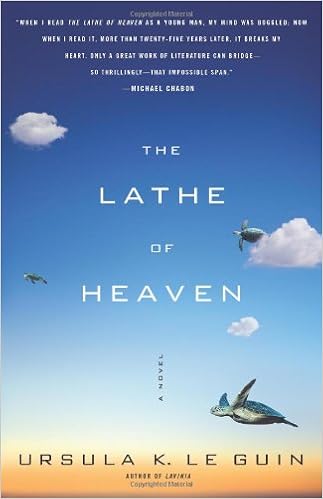
The Lathe Of Heaven – –  Ursula K. Le Guin

My Rating – Must Read

Level – Moderate read, short

Summary
Sometime in the future a man is caught using someone else’s pharmacy card for access to sleeping pills. He is evaluated and sent to a psychologist and sleep specialist to whom he reveals that he is afraid to dream. He hesitates but eventually admits his fear is due to the fact that his dreams change waking life. Not only does it change real life, but it changes all reality. If he goes to sleep and there are seven billion people in the world and dreams there are now only one billion, for everyone left, there will only have been a billion people for some time.

He essentially creates a parallel reality and new timeline that even changes the people’s past. The twist comes when the doctor becomes aware of the change, due to be present during the dreaming. The man suspects the doctor is using his dreams to change the world and seeks the help of an attorney. The rest of the story is his struggle in the changing world while dealing with the doctor. I’ll leave it there so as not to spoil any of the story.

My Thoughts
This book is crazy, and is probably the only fiction book I’ve ever read that had be flipping back and rereading parts. I found this book so entertaining that I put off catching up on Game of Thrones and stayed up late one night to finish it. As always, there are some unintentionally humorous moments that come from a book written decades ago that takes place in the ‘future’ that is in our current past. There is major fear that in 2002 there would be over seven billion people on earth. This would lead to overcrowding, food shortages, and environmental disaster. There were only three billion people at the time, and almost 40 year prior, it had been two billion, so the idea that we’d more than double in the next 40 was probably inconceivable. Here is an interesting article to get a context on the time in which the book was written – http://www.ncbi.nlm.nih.gov/pmc/articles/PMC3777609/

Anyone looking for some good fiction to read this summer must get this book. If you are interested in things like dreams or alternate time realities, you’ll certainly enjoy this book.

Reading Guide to Hosea 2

I am continuing on with my series on reading the minor prophets. See my cheat sheet for the minor prophets, Intro to Hosea and Hosea 1. My recommended way to use this guide is to go read Hosea 2, come back here look through the post, then basically read them side by side, reading through the verse and checking here if there is something you find confusing. Note I am using the Chapter breaks that take what is verse 2:1-2 in some versions and makes it verses 1:10-11. 

Chapter 2
2. Rebuke your mother, for she has lost the right to be called wife and mother. This chapter starts of with the voice of an ‘aggrieved husband and father, speaking as plaintiff before the court at first addressing his children’ – WBC.

5. The other lovers are Baal. This continues the marriage/covenant metaphor, so Israel becomes unfaithful to Yahweh.

7. Though she seeks others, she does not find and does not get what she wants. Therefore, she decided to return (the Hebrew word implies repentance) to her original lover, the to whom she has been unfaithful.

9-13. Retribution comes, the punishment for apostasy. Israel worshiped Baal, believing their agricultural blessing came from him. The used the bounty and gold/silver that Yahweh blessed them with as offerings to him. They did not know that it was Yahweh all along. So he will take from them. He will take back the blessings. Not only that, he will curse/destroy their vineyards and fig trees. They will be exposed (no longer protected) and no one will rescue them.

14-15. In a twist, Yahweh decides he will seduce(romance) her. The valley has the meaning of punishment. Instead, He will make it a place of hope. The metaphor in these verses is that the will be as new loves, after God had brought out of Egypt and into the wilderness. They loved Yahweh, and worshiped him only.

16-21. The day of the Lord, this alludes to the future day of the Victory of Yahweh and the restoration of Israel. The will once again ‘call on the name of the Lord’. The will no longer look to Baal. There will be new covenant in that day. There will eventually be no more war or danger and the people shall rest at ease.

22-23. They will again be provided for with crops and bounty – wine and grains. Jezreel will not have the punishment connotation but will mean it’s true (Hebrew) meaning, Yahweh sows. He will restore the land to Israel. As they call on Yahweh as Lord, they will be blessed and will be His People. Therefor, ‘No Mercy’ and ‘Not My People’ will be destroyed and removed – as in they will not longer exist, because now, they He will say ‘You are my people’ and they will say ‘You are out God.’

Commentaries
Hosea, Joel: An Exegetical and Theological Exposition of Holy Scripture (The New American Commentary)
The Minor Prophets: Hosea-Jonah (Expositional Commentary) (Volume 1)
Hosea (Tyndale Old Testament Commentaries)
Hosea-Jonah, Volume 31 (Word Biblical Commentary)

Book Review: The Year Without a Purchase

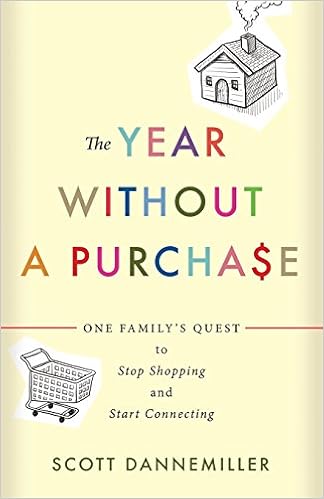
The Year without a Purchase: One Family’s Quest to Stop Shopping and Start Connecting – Scott Dannemiller

My Rating Put it on the List – if you struggle with spending/consumerism, Probably Not Worth Your Time – if you don’t

Level Short, easy.

Summary
Title pretty much sums it up.
Dannemiller comes to a realization that he and his wife and children have too much junk. They think back to their missionary days in Guatemala and how happy they were with very little. They decide to not spend any money other than what they had to, with a few exceptions, over the upcoming year. They allowed for essentials, groceries and bills, but then no more things. For gifts, they decided they would have to be homemade or an ‘experience.’

Chronicling the year, he writes humorously about the ups and downs of their challenge – from kids birthday parties, major holidays, and even learning how to sew and repair (darn?) socks. In the end, he realizes he doesn’t even miss the money, and in fact, didn’t believe his wife when she showed him how much they had saved. Shockingly, his children never even new of the challenge. They made a decision not to tell them what was happening, and in the end, with gifts of experience instead of junk or the next new toy, they were just as happy (or happier) as before.

My Thoughts
As Erasmus wrote (technically, this has be mistranslated to English): When I get a little money I buy books; and if any is left I buy food and clothes. Except I’d replace clothes with fishing gear/tackle. My point being, me and Mrs. MMT don’t really buy a whole lot. There were certainly times we wanted to, but we either didn’t have the money, were paying off debt, saving for a house, or saving for a baby. Now, it is just kind of the way we are. She has always been big on experiences and travels over material things. In fact, we’ve never even given each other anniversary gifts, choosing instead to take a four or five day getaway.

That being said, the book is a good reminder of the perils of consumerism. Dannemiller does a good job with his research in pointing out the amount the average American spends and wastes in a year. Now, if you are on the hedonic treadmill of buy, and buy, and buy, this book is for you. It is almost a how-to in it’s insightfulness. The author is quite funny, though his shtick can get a bit old or too frequent.

This book is published by a Christian publishing company, and he does speak broadly of his reasons being based on his faith. However, it isn’t exclusively for Christians, and I don’t mean that in the Christiany way of universal truth or whatever. With the exception of the epigraphs being verses from the Bible, there isn’t much religiousosity to it. That’s not a criticism of him. My point is a review a good bit of Christian living and Theology books, and this is not that. It really is about a guy trying not to buy things, and is a good example for anyone who struggles with budgeting.


Professional Reader*I received a free copy of this book in exchange for an honest review.

Reading Guide to Hosea 1

I am continuing on with my series on reading the minor prophets. See my cheat sheet for the minor prophets and my Intro to Hosea. My reccomended way to use this guide is to go read Hosea 1, come back here look through the post, then basically read them side by side, reading through the verse and checking here if there is something you find confusing. Note I am using the Chapter breaks that take what is verse 2:1-2 in some versions and makes it verses 1:10-11. 

Chapter 1
2. Many variants exist here for the whom he is told to marry. Version will say promiscuous, adulterous or possible unfaithful, or as in the ESV, wife of whoredom, or you’ll see prostitute. The word in the Hebrew means promiscuous. The NAC helpfully points out, that there is very little difference in a promiscuous woman and prostitute in these times. Women had no way to work or make money to support themselves, so either she is promiscuous and lives off the support and ‘gifts of her lovers’, or she is directly paid to have sex. Either way, she is breaking covenant vows as well as receiving money for sex. WBC takes this as symbolism, in that all are promiscuous, living in unfaithful company. This is why the children are likewise called promiscuous. I tend to agree with the NAC that he married an ‘immoral woman’. One who was known to be promiscuous before the marriage and one Hosea may have suspected would be so after marriage as well.
The children obviously are not prostitutes, but, if not symbolic, they are possible out of wedlock, or likely, at least for the second two, illegitimate children of other men, during her marriage to Hosea.

4. Jezreel was a place and valley that may have stuck in the minds of Israelite as a place where there was bloodshed. Specifically that which Jehu was commanded to do in Kings. Why would his house then be punished? NAC translate the sentence to be – God will bring the bloodshed of Jezreel to the house of Jehu. Not necessarily for what Jehu did, but what he and his household failed to learn from the commands and actions.

6. While Jezreel doesn’t necessarily mean anything (possibly God sows), the second child is given a name of meaning. The name Lo-Ruhamah means ‘no compassion/mercy. ‘

7. Judah will be saved from destruction, but not through soldiers or war, for some as of yet unspecified reason.

8. Not sure why we are given this detail. Children were typically weaned at roughly three years old. This is perhaps to give us an understanding of the length of time of the prophecy.

9. The third child is also given a symbolic mean. Lo-Ammi means ‘not my children.’

10-11. Seems to contradict the oracle of the third child. Not my children, then assurance of the children. This actually follows many prophets actions in that there will be immediate punishment, followed by restoration with God as the covenant people. This is a reminder of that covenant and promise of future blessings. Instead of Jezreel meaning the coming destruction, as in v. 4, it will be remembered due to a ‘Day of the Lord’ type event where enemies of Israel are destroyed, either literally or metaphorically. That is, it will go from having a name like ‘Pearl Harbor’ to being ‘Normandy/D-Day.’

Commentaries
Hosea, Joel: An Exegetical and Theological Exposition of Holy Scripture (The New American Commentary)
The Minor Prophets: Hosea-Jonah (Expositional Commentary) (Volume 1)
Hosea (Tyndale Old Testament Commentaries)
Hosea-Jonah, Volume 31 (Word Biblical Commentary)