Book Review: The Christian Life

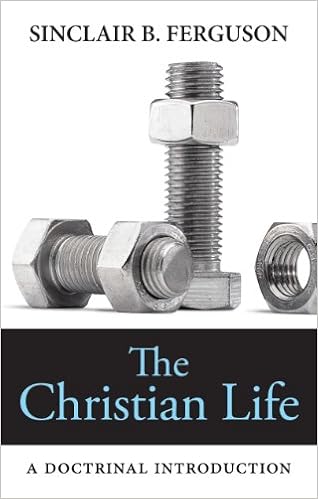
The Christian LIfe: A Doctrinal Introduction

Rating – Must Read

Level – Quick, easy read

Summary
The subtitle of this book is really illustrative of what this book is about. It is an introduction to doctrine for Christians, more specifically reformed theology. This is probably the best intro book I’ve ever read. You won’t get the full intro that you’d need to tackle Systematic Theology, there is no doctrine of church, sacrament, eschatology, etc., but his chapters on man, sin, grace, election/adoption, justification, and christian living are possibly unmatched in their accessibility to the average Christian.

I’d highly recommend this book for anyone looking to understand more about doctrine, to go above a Sunday School level, and it may even work as a gateway book into deeper study of theology. Ferguson was a theologian and professor, but this book is written by a pastor first and foremost and can easily be read by any Christian at any level of education and knowledge.

My Thoughts
If I’ve somehow been unclear, I’m really high on this book. Clocking in under 200 pages but with 18 chapters, anyone can hope in and out of the different doctrinal chapters with ease. As I mentioned above, this is a great intro for anyone looking to expand their knowledge. It is also a great reminder to pastor and theologians of the basics of doctrine. A way to bring those who greater knowledge back down to a simpler level, a more concise study of what others need to know.

This is written almost as a series of sermons and could be a great book for a Bible study or community group looking for something to read. For pastors and elders in the church, this should be the go to suggested reading for anyone inquiring about doctrine. Overall, it is a must read for every Christian.

Book Review: Katharine and Martin Luther

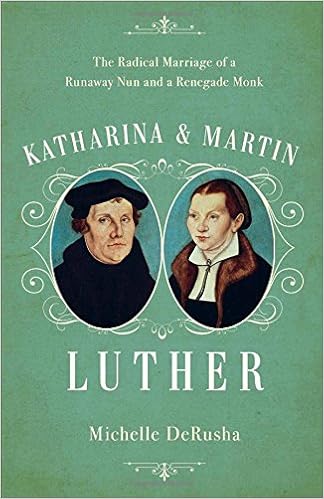
Katharina and Martin Luther: The Radical Marriage of a Runaway Nun and a Renegade Monk

Rating –  If you have time

Level – Easy read, short to medium length

Summary
For the most part the book is about the marriage of Katharina and Marin Luther. The first few chapters look at the two of them individually, then their life together, culminating in the death of Martin. The book is at its best, not necessarily discussion their marriage, but when getting into the minutia of life in the early modern period. The book is at it’s worst when the author seems surprised by the fact that life was hard for women 500 years ago.

If you are looking for an interesting book about the marriage between a former monk and former nun, this is probably not it. There are interesting insights, but it is far from a good history, there is a good bit of editorializing and comparing them to marriages of today. There is a little bit about the famous Table Talks and their life together mentoring and growing the next generation of reformers, but not nearly enough. In my view, this should be the centerpiece of a book about their marriage. It truly was revolutionary, but the author instead focuses her surprise on the fact that Martin loved and respected Katharina despite believing the Bible to the the Work of God.

My Thoughts
It should be pretty clear from above that I was a little disappointed in this book. The author goes in and out of interesting historical facts to discussing her shock that someone could read the Bible, believe it, especially as it pertains to the so-called ‘roles of marriage’ and then still love their wife. She starts with a good history of the issues women face, and they are shocking and substantial, but she doesn’t seem to be able to separate them from their place in history and our current time. She anachronistically puts modern views into the history of the early modern period.

Katharina and Martin hosted dignitaries, students, pastors, and leading intellectuals of the time from across Germany and other parts of Europe. She really misses out in this book by not getting into more of those conversations and how they related to each other. She also comes off a bit patronizing, unintentionally, to Katharina. She takes minor quips and solid comebacks and conflates them into great iconoclastic events.

Overall the book seems a bit jumbled, shifting focus too often. There is far too many uses of phrases like, ‘one wonders’ and ‘it’s not hard to guess’ for my liking. To be fair, in her defense, she never claims to be a historian or that this book is a definitive biography of historical discussion on their marriage. Her near unending shock that there are many letters retained from possibly the most famous and impactful European in church history greatly outnumber his wife’s letters in a time when most women (or people for that matter) could not even read, gets old quickly.  I guess if you happen across this book at a good price it could be worth while, but over all, it is probably not worth your time.

*I received a free copy of this book in exchange for an honest review. See more here.

Book Review: Generation Z

Meet Generation Z: Understanding and Reaching the New Post-Christian World

Rating – Put it on your list

Level – Pretty easy ready, goes quickly, about 200 pages.

Summary
The book is exactly what it sounds like, and introduction to Generation Z, who he defines as those born between 1993 and 2012, how they will be different form previous generations and what the churches needs to do about it.

The book is broken into two parts, plus a pretty extensive appendices. The first part is focused on the Zs and the second on the difference and the churches new approach. The focus is mostly on the changing demographic of Zs, they are less white, more multiethnic, more liberal (economically and socially), and less Christian. White does a good job explaining the way technology is changing their lives, especially as it relates to early sexualization and porn.

My Thoughts
I think White does a good job of not being alarmist. It is a fact of history that the next generation will be our undoing, people have been saying it for thousands of years. So, it was good to read him taking a measured approach. There is a lot of media hype over the ‘nones’, and he explores how it is possible that a middle group who could go either way on the church is now siding with the no-religion group because it is the more socially advantageous position as it is more of the culture norm (the same way the opposite was true 50 years ago and through most of American history). I’ll add two reason I think the ‘nones’ are overblown, one it is cool now to be ‘independent’, we see it with political parties. I see it in church going people who are very devout, they like to say that they don’t like names or denominations. This is already a bit of a tangent, but second, I’ve worked with detailed surveys throughout my career. People are bad at them. You can look at the polling data and see that 9% of self-identified Atheist are certain there is a god when asked. I think it is something like 14% when the question is asked of self-identified Agnostics. Likewise, there are a number of self-identified Christians who say it is impossible to know if God exist. Due to this, I do think church attendance will continue dropping with the Zs and whatever comes next, but the core of the devout won’t change too much.

I like his definition of Z better than some of the others I’ve seen. Other have them starting in 2000 or even as late as 2005, and I think his focus works a little better. More importantly, there is a difference between them and the millennials, just as there was between X and boomers, and SIlent and Greatest before them. The first half of this book is good for anyone looking for a brief primer on the upcoming generation. The book as a whole is important for Christians to understand the changes that are coming, especially pastors and youth workers. Anyone in this latter group should make reading this book a priority.

*I received this book for free in exchange for an honest review. See more here.

Systematic Theology Study Bible

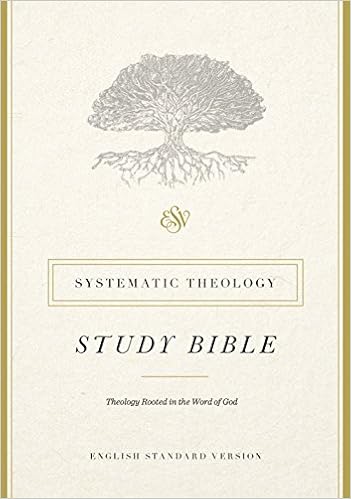
ESV Systematic Theology Study Bible – New from Crossway , coming some time in the Fall. The latest date I’ve seen is October 21, 2017; however, it has already moved once as far as I can tell. You know I’m big on Study Bibles, and obviously adding Systematics is going to be big for me. I plan on getting this as soon as I can, hopefully before it is published. I’ll keep you updated on what I know.

Update – Looks like all editions (Hardcover, Leather, fake Leather) are going to be available 10/31/2017. That is the 500th Anniversary of the Reformation starting (Luther nailing the 95 Theses).

I won’t be buying the hardcover, I tend to favor the fake leather, but I can’t quite tell what the design looks like. May actually splurge and get the real leather.

2017 Reading Challenge

As I mentioned in my review of my 2016 challenge, I’m not planning on reading as many books this year. There are a few reasons for this, one, as of last week, I have started a new job that has roughly tripled my commute. Another reason is that I am starting some course work from CCEF, before entering completely into a new master’s program with Westminster. Taking classes means specific reading requirements, but also lots of writing, so I cannot devote as much time to reading. Finally, as I plowed through more and more books last year, I ended up writing less and less. So, with what little time I have between taking classes, a new job, and a toddler, I’d like to focus a little more writing.

Anyway, to the books. I’m laying out my challenge a little differently this year. Last year, I basically just say, hey, I’m going to read a bunch of books. This year I’m listing a number of specific books, and then some categories for the remaining few.

The first group are two books that I am reading daily, one is a devotional, My Utmost for His Highest, and the other is the Bible. I’ve mentioned the M’Cheyne plan before, so I’m putting it to the test this year.

Next group, novels. If I ever finish War and Peace, I’d like to check out three other novels – Hyperion, Lolita, and Brave New World. I also have read a few books through the Kindle First thing, so, call it maybe two more from that category.

The third group is my Christiany stuff, of which there are only three. I know, that’s not many for a blog with Theologian in the title, but bear with me, more Christian life/thought type books will come out in other categories. The specific three I’d like to hit are Five Views of Biblical Inerrancy (from the great Counterpoints series), Boice’s exposition on the Sermon on the Mount, and the classic, The Plan of Salvation.

Next up, non-fiction. Again, only four of these, though it does include one ‘big-book’, Capital in the Twenty-First Century (funny side note on this, Kindle can tell if you’ve finished a book or not and obviously if you’ve downloaded a book. So, the year this book came out, it was the most downloaded non-fiction, and the least read/finished, percentage-wise, of any book). Another good one I’ve I wanted to read for a while, Misbehaving (about Behavioral Economics). Sprout just turned two, so obviously it’s about time for me to obsess over her education, so I have Einstein Never Used Flash Cards on the list. Rounding out the non-fiction list is an autobiography from Jimmy Carter – A Full Life, Reflections at Ninety – which is just a cool title. I’ll also add a stretch goal here, if I’m doing well come, say, November, I’ll through in Gödel, Escher and Bach, another big book, so we will see.

Probably the biggest category, books I need to read for school. So far this include, Marriage Matters, Hold Me Tight, The Christian Life, and Systems Theory in Action. I’ve already read two others for these classes. This is the list for just two courses. Now, in the summer, I’ll take one or two more courses, but none in the fall, so this list will grow by probably three to seven.

Finally, my review copy books. So far, there are three on my list – The Christian Lover, Pillars of Grace, and The End of Protestantism. The first two are from Reformation Trust Publishing, which has been pretty easy to use. The last one is from Netgalley, which I’m not entirely sure that I like. I’ve reviewed a few from there, but I’ve also skipped a number of them, and they’ve been taken off my list or my ability to read them is gone. Not really their fault, since I didn’t review them. However, I think I just like working with the publishers directly. I’ve requested three more from Baker, and Crossway just emailed me the other day to say I need to go pick up another one. This will round out whatever is left in my goal of 24, and any that comes after that.

So there you go, I’ve specifically called out 19 of my 24 book goal (I guess 20 of my 25 stretch, if that works) with the final five being a mix of school and review copy books. Hopefully, it will go well and maybe I can move it up to 30 in the fall, however that will probably be my max, so I can focus on other things. Of course, this is likely to be a very crazy year, so it’s possible that I won’t even hit my goal.

You can stay updated at my Goodreads page, or wait for an update that will come probably sometime in the summer.

Review of My 2016 Reading Challenge

I had never heard of the reading challenge until about February of 2016. I set out a goal of 30 books, which I thought was pretty ambitious. I basically had the idea that I would be able to do 2.5 book a year. Well, that really got me going, and back in the reading heavily, as by the end of the year I had read 51 books, and about 850 pages of War and Peace. That is 15,607 pages, but who’s counting?

The biggest book I attempted was obviously War and Peace, but the biggest I completed was The American President: From Teddy Roosevelt to Bill Clinton, with a meaty 886 page count. The smallest was Meditations , at 99 pages long. I read everything from novels, to history, personal writings/thoughts, daily devotionals to heavy theological tomes. I’d say the challenge plays an interesting aspect in it all. On the one hand, you are, in fact, challenging yourself. This can push you towards things that are a little tougher, like Reformed Dogmatics Volume 2, or long, long books, like War and Peace (Vintage Classics).

On the other hand, there is a bit of a feeling like you are just powering through. Yes, powering through can make you finish a book you started that you might otherwise have discarded, but it can almost give you the feeling of reading for school. You are reading to finish the book, not because you are necessarily interested in it. It effects some of your choice, too. The three largest books I completed had page counts of 685, 704, and 886; plus War and Peace has over 1,300. This makes shorter books seem more appealing, simply because it will help add to your book count. Though, in my defense, my average book was 289 pages.

Anyway, it can be a fun way to challenge yourself, but this year I will put less on the Challenge. Probably the biggest difference going forward will be to lay out a number of books first. So, not just say 24 books, but say this book, that book, and then 10 more, or something to that affect. I won’t know completely what will be on the list, as I hope to receive more review copies. This year, I received 13 review copies, so that is kind of cool. I also already have about five or six that I need to review. More on that later. See below for my challenge list and check out my book review page for all the books for which I have written reviews.

J.K.’s bookshelf: 2016-challenge

Spiritual Disciplines for the Christian Life
liked it

My Rating –Put it on the ListLevel – Not very readable, seems longer than it is

Summary
The book is exactly what you think it is based on the title. He jumps straight in with the first chapter explaining what he thinks (based on scrip…

tagged:
2016-challenge
The Millionaire Next Door
it was ok
tagged:
2016-challenge
Do More Better: A Practical Guide to Productivity
really liked it
It is really difficult to write a summary that doesn’t just rip off the table of contents. Basically, he explains the system that works for him. This includes a mission statement (he calls this a productivity catechism), then finding thi…
tagged:
2016-challenge
A History of the World in 6 Glasses
really liked it
First of all, it isn’t a history of each individual beverage, though there is plenty of that, but a history of the world (as the title indicates) viewed through the lens of what (and why) people were drinking at the time. The drinks and …
tagged:
2016-challenge
Just Do Something: A Liberating Approach to Finding God's Will
it was amazing
Many people search for God’s will, but American Evangelicals, especially Millennials, have made it an art form. He claims that doing this ‘leads us to no where’ and calls us ‘directionally challenged’ (these are names of the chapters in …
tagged:
2016-challenge
How to Read Genesis
it was amazing

My Rating – Must ReadLevel – Easy, short

Summary
This book is exactly what the title says it is a guidebook to understanding and reading Genesis. Longman explains what the book (Genesis) is, who wrote it, whom it was written to as wel…

tagged:
2016-challenge
Four Views on the Historical Adam
really liked it

My Rating – Put it on Your ListLevel – Somewhat technical, requires a higher level knowledge of Genesis and some theology, somewhat short, but at times reads longer than it is.

Summary
This book is exactly what the title says, though …

tagged:
2016-challenge
Pirate Latitudes
really liked it

My Rating –If You are Looking for SomethingLevel – Easy & quick, medium length

Summary
It’s about pirates. If you are like me, what more do you need? Actually, it’s technically not about pirates, it’s about privateers and they are ver…

tagged:
2016-challenge
The Church: The Gospel Made Visible
it was ok

My Rating –If You are Looking for Something – about Baptist view of church, Probably Not Worth Your Time – if you are already familiar with Baptist viewsLevel – short, easy read

Summary
This book could basically be a few sections in…

tagged:
2016-challenge
Meditations
did not like it

My Rating – PassLevel – Short, writing can be long and choppy, knowledge of history and philosophy would be helpful

Summary
Basically random thoughts from a guy who thought he was going to die. Most ideas are a reflection of the tim…

tagged:
2016-challenge
The Mighty Weakness of John Knox
liked it

My Rating – If You are Looking for SomethingLevel – Short, easy

Summary
It’s difficult to write a summary of a biography. The book itself is a biography of the life of John Knox. To hit some high points: Knox was friends with John Cal…

tagged:
2016-challenge
How Would Jesus Vote?: Politics, the Bible, and Loving Your Neighbor
it was amazing

My Rating – Must ReadLevel – Fairly Easy, moderate in length

Summary
The book seeks to look at broad topics in American politics and see what we can determine about them from the Bible. Bock does this mostly by listing verses and how …

tagged:
2016-challenge
Crime and Punishment
really liked it

My Rating –Put it on the ListLevel – Tough, dense, fairly long

Summary
Rodion (Rody) Románovich Raskolnikov is a poor college student in St. Petersburg who decides to murder an old pawnbroker with an ax so that he can rob her. Things …

tagged:
2016-challenge
The Unwavering Resolve of Jonathan Edwards
really liked it

My Rating – Put it on the listLevel – Easy, Medium length

Summary
The first chapter is a short biographical stretch of the man many consider to be the greatest American Theologian of all time. The rest of the chapters are devoted to E…

tagged:
2016-challenge
The Lathe of Heaven
it was amazing

My Rating – Must ReadLevel – Moderate read, short

Summary
Sometime in the future a man is caught using someone else’s pharmacy card for access to sleeping pills. He is evaluated and sent to a psychologist and sleep specialist to whom …

tagged:
2016-challenge
The Blue Zones: Lessons for Living Longer From the People Who've Lived the Longest
it was amazing

My Rating – Must ReadLevel – Easy read, medium length, but reads quickly

Summary
Blue zones, so named because while researching the first one, a blue circle was drawn around they area under discussion, are areas in the world where peo…

tagged:
2016-challenge
The Billion Dollar Spy: A True Story of Cold War Espionage and Betrayal
it was amazing

My Rating – Must ReadLevel – Easy, fast read; medium length

Summary
The story, broadly, is about the CIA field office in Moscow and its operations. Under different CIA directors and even field office directors, their focuses change or…

tagged:
2016-challenge
On Writing: A Memoir of the Craft
it was amazing

My Rating – Must ReadLevel – Easy, quick read

Summary
The book is broken up into two main parts, C.V. and What Writing is, Toolbox, and On Writing, plus a longish post-script chapter, which is followed by two more short post-post-scri…

tagged:
2016-challenge
The Hitchhiker's Guide to the Galaxy
liked it

My Rating – If You Are Looking for SomethingLevel – Quick, easy read

Summary
Arthur Dent is trying to stop bulldozers from demolishing his house when his friend Ford Perfect stops by and convinces him to go to the pub instead. Perfect…

tagged:
2016-challenge
Seeking Refuge: On the Shores of the Global Refugee Crisis
really liked it

My Rating – Put it on your listLevel – short, easy. A quick read, but I’m also going to add compelling, especially as you read the personal stories.

My Thoughts/Summary Mix
This is an important and timely book. I think two overarching…

tagged:
2016-challenge
Thinking, Fast and Slow
really liked it

My Rating – Put it on your listLevel – moderate to difficult read, it is well written but some of the concept are tough, fairly long, but ready a little quicker then the 400+ pages

Summary
Broadly speaking, this book is about thinking…

tagged:
2016-challenge
Mile Marker Zero
really liked it
tagged:
2016-challenge
The Year without a Purchase: One Family's Quest to Stop Shopping and Start Connecting
liked it

My Rating – Put it on the List – if you struggle with spending/consumerism, Probably Not Worth Your Time – if you don’tLevel – Short, easy.

Summary
Title pretty much sums it up. Dannemiller comes to a realization that he and his wife…

tagged:
2016-challenge
Trout Bum
really liked it

My Rating – Put it on the list (if you are a fishermen; if not, pass)Level – Short, easy, requires some familiarity with fly fishing.

Summary
It is hard to summarize this book. Basically it’s just a guy writing a few short essays/stor…

tagged:
2016-challenge and to-read
What Christians Ought to Believe: An Introduction to Christian Doctrine Through the Apostles' Creed
it was amazing

My Rating – Must ReadLevel – Medium length, fairly easy and does not require more than a basic knowledge of the Bible or Theology.

Summary
The book is essentially an exposition of The Apostles’ Creed. That is, he goes line by line and…

tagged:
2016-challenge
The Call: Finding and Fulfilling the Central Purpose of Your Life
liked it

My Rating – If you are looking for somethingLevel – Choppy read, short but reads longer than it is

Summary
First of all, if you’ve been recommend this book by a friend or pastor and they tell it is written by a guy named Guinness, no …

tagged:
2016-challenge
The Letter of James
really liked it
tagged:
2016-challenge
Every Good Endeavor: Connecting Your Work to God's Plan for the World
really liked it

My Rating – Put it on your listLevel – Easy read, medium length

Summary
This is another book that is hard to summarize with just repeating the title or copy/pasting the table of contents. I guess the title isn’t super clear, it comes …

tagged:
2016-challenge
Don't Waste Your Life
liked it
tagged:
2016-challenge
Disciplines of a Godly Man
it was amazing

My Rating – Must ReadLevel – Fairly easy read, moderate length

Summary
As the title implies, this is a book about disciplines for men who are trying to live a ‘Godly’ life. After the introduction Hughes goes into the 17 disciplines he…

tagged:
2016-challenge
Four Views on Hell: Second Edition
really liked it

My Rating -Put it on the listLevel – Medium length, get’s mildly technical, but overall fairly easy.

Summary
As the title say, the book argues four thoughts on hell. Well, really it is three views of hell, and another who goes on a ta…

tagged:
2016-challenge
Sapiens: A Brief History of Humankind
really liked it

My Rating – Put it on your listLevel – His style makes it moderate, but the book covers topics like biology, physics, philosophy, anthropology, economics, and of course, history. So, not everyone will be able to jump right into this bo…

tagged:
2016-challenge
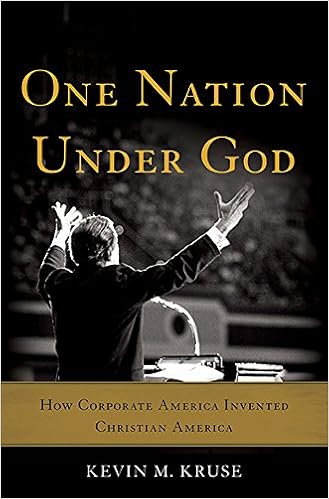
One Nation Under God: How Corporate America Invented Christian America
really liked it

My rating – Put it on your listLevel – easy, a little wordy, medium length but reads quickly

Summary
The title might be a bit of a misnomer. People expecting this book to be about whether or not America was founded as a Christian nati…

tagged:
2016-challenge
A Different Kind of Happiness: Discovering the Joy That Comes from Sacrificial Love
really liked it

Rating – Put it on you listLevel – Easy, moderate in length

Summary
First of all, do not be thrown off by the cover/title. This is not a fluffy self-helpy type book. Instead Dr. Crabb challenges the readers to love like Jesus, but not…

tagged:
2016-challenge
The Pursuit of God
tagged:
2016-challenge
Speaking of Homosexuality: Discussing the Issues with Kindness and Clarity
it was amazing

Rating – Must ReadLevel – Medium length, reads quickly and easily

Summary
The book, as the title indicates, is about homosexuality in the church and the world today. Dallas covers a large swath of the topic, from how to talk to people…

tagged:
2016-challenge
Light In August
tagged:
2016-challenge


goodreads.com

Share book reviews and ratings with J.K., and even join a book club on Goodreads.

Book Review: Parenting

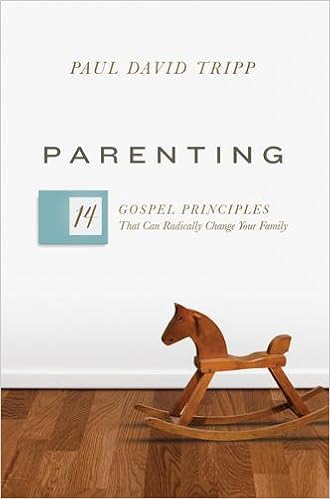
Parenting: 14 Gospel Principles That Can Radically Change Your Family

My Rating –If You are Looking for Something

Level – Quick, easy read

Summary
Well, it’s a book about parenting. Pretty good summary, right? This is an interesting book because the approach is very different that most parenting books. The main difference being that there is nothing ‘practical’ about this book. That can be incredibly frustrating and challenging as you read. You are not going to find anything about sleep training, how to deal with allowances, or curfews in here. I guess the best summary would be to say that it is solid reformed theology and how it relates to parenting.

Probably the most interesting part is a reminder of the most important roll for you is as parent. What would you say if asked? I know it’s not to make my kid happy. My answer is typically something about independence and teaching your kid to take care of herself. That is wrong though, as Tripp points out, your most important goal is to teach your child about God, who He is and what He has done for us. That is his starting point, and it only gets more challenging from there.

My Thoughts
This book is a mix of good reminders, frustrations, and challenges of parenting. If you are familiar with reformed theology, you’ll have a decent idea of what is coming in this. Your child has problems because she is sinful. You don’t model well and have problems being a good parent because you are sinful. That can get old, because at times you feel, what’s the point, then? It is incredibly useful however, like much in the Biblical Counseling movement that Tripp is a part of, the focus on someone’s sinful nature is a good place to start. It can be kind of funny, sometimes, honestly. I’ll catch myself in a moment with Sprout, when I’m angry and thinking, why in the hell did you do that? Then I kind of laugh and think, well, you are just a tiny fallen human.

Tripp also does a good job of shining a spotlight on parents as sinners. That’s also annoying, but again, it is useful to help check your own feelings and reactions. All that being said, I wanted to like this book more. If you are having problems parenting, or looking for a foundation, or just trying to read everything you can about parenting, then this is a good book. It is well written and incredibly strong on theological basis. I may be the only one, but it just didn’t sit right, I’m not sure why. Maybe because it is different. It really is a book about the heart of parenting and understanding the heart of a child.

I have a toddler, so I guess I was wanting something that spells things out a bit more. There are so many day to day things and broader parenting questions that this book doesn’t really address (or attempt to, to be fair). Should you spank, and how old is too old? What about screen time or games on the phone? You won’t find these answers, and maybe in the long run, they don’t really matter, but that is what you expect from typical books. Instead, what Tripp has done, is focus you first on the important task of teaching your child about the Lord, then basically just asking you challenging questions, instead of offering answers, then leave you to figure it out.

* I received a free copy of this book from Crossway in exchange for an honest review.

Book Review: One Nation Under God

One Nation Under God: How Corporate America Invented Christian America – Kevin M. Kruse

My rating – Put it on your list

Level – easy, a little wordy, medium length but reads quickly

Summary
The title might be a bit of a misnomer. People expecting this book to be about whether or not America was founded as a Christian nation should look elsewhere. There a many, many books with this title that more or less discuss that idea or whether we are currently. In many ways, it is a great and accurate title as the insertion of the phrase ‘under God’ is a critical juncture in his story line. For those unaware, it was added in the 50’s, the so-called ‘good ol’ days’.

What the book is about, is how a group of people decided to try and revise history, and shape the future, for their own personal financial gain. Conflating Christianity with the nation is the method they choose. This started maybe further back than people might have thought. If you are like me, you might assume much of the rhetoric started with Reagan. Instead, Kruse traces is back to the 30’s and business responses to New Deal regulation. In fact, he barely discussing Reagan.

The book is broken into three major parts – creation, consecration, and conflict. That is, the ideas and actions behind the national religion push (very conspiratorially written), the achievement of those goals, and the current situation of those goals clashing with modern America.

I guess I should also note that Kruse is a historian. I have no idea his religious preference, if any, and do not think he mentions it in the book. Point being, this is not written from the Christian prospective and though quite fair and accurate, he does seem suspicious of it. However, it certainly isn’t anti-Christian or an attack in any way.

My Thoughts
I hate to admit that I like this book because it confirmed my own beliefs, but it is true. If you are ever involved in anything politically liberal, you will likely hear that Christians have corrupted the Republican party. However, it is the other way around. I’ve always viewed the situation as Reagan’s attempt to tie Evangelicals to the Republican party as a response to and actual Evangelical Christian, and likely the most religious president in American history, Jimmy Carter. If I ever do get a change to pursue a PhD, I’d like to write my dissertation on this topic.

Interestingly, the attempt to put them together is much, much older and was well in place and already successful before Reagan. It was very interesting, yet disturbing, to read the entanglement of business interest, prosperity gospel preachers, and politics. Perhaps the most shocking thing to me was the placement of the 10 Commandments at courthouses. Many people may have though, well, they’ve been there all along, perhaps hundreds of years. No. Almost all of the monuments, the large, stone tablet looking representations were put up in the early 50’s. They were a marketing ploy. Like a Captain American action figure in a happy meal, they were used to promote the movie ‘The Ten Commandments’.

It all comes down to a basic fear felt by many of the Evangelical Left (that is, those who are political liberal, but deeply conservative in Christian belief) – that Christianity, God, and the Bible have all been used by business interest. Greed has lead to obfuscating history and the portrayal of the future as antagonistic to Believers. All so that certain people in companies could have less regulation and taxes.

This will be hard to swallow for many staunch conservatives. I know, because I used to be one. Then I started to become suspicious that we were being used. Now, I will say, if you are politically conservative, that’s fine, nothing wrong with that. Just don’t claim the Bible is the bases of your economic or tax policy. You’ve been used as a pawn, even voting against your own self interest by people who may not even view God as you do.

However, anyone will to sit, read, and review the facts about politics and religion, this book needs to be on your list. If you are a Christian and political liberal, who has always wondered how it got so off, this book is a must read for historical understanding. If you are a Christian, who maybe doesn’t even have strong political leanings, but were just always curious as to why, in America, the political right and Evangelicals are so intertwined, this book is also a must read. Any Christian with any interest in political at all, should add this to their list of books to read.

I want to wrap up with a quick note about Trump. I’m writing this 4 days before the election, but I don’t think it will be posted until a few weeks after. But, if you’ve looked around and wondered how in the Hell is Trump the supposed representative of the Evangelical vote, this book will help you understand. For one, Trump grew up in the church of one of the biggest, most popular/powerful prosperity gospel preachers. Sadly, this history presented in this book will also explain why so many ‘preachers’ or other ‘Evangelical’ public figures have support the thrice divorced, pro-choice, multi-millionaire. If you’ve read some of these guy’s condemnation of Bill Clinton from the 90’s, but their full throated support for Trump and though, that doesn’t make any sense, then read this book, and it will. We go from claiming that morality matters in the White House, to the weak and somewhat ridiculous claim that we are not electing a ‘pastor-in-chief’ (ridiculous, not because it is wrong, but that apparently only pastors shouldn’t grab random women by the pussy).

I will say, I do hope that the Trump candidacy will disentangle party politics with religion. As I write this, I have a sincere wish that Evangelicals will not vote (majority) for Trump; however, I am not hopeful.

Edit – He won 81% of the Evangelicals, more than Romney or even Bush. 
Book Review: Sapiens

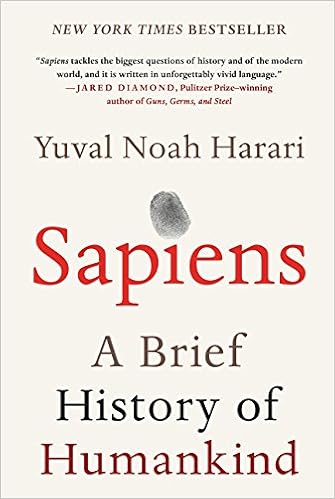
Sapiens: A Brief History of Humankind – Yuval Harari

My Rating – Put it on your list

Level – His style makes it moderate, but the book covers topics like biology, physics, philosophy, anthropology, economics, and of course, history. So, not everyone will be able to jump right into this book. Fairly long at almost 500 pages.

Summary
Harari splits the book into four parts (total of 20 chapters), The Cognitive Revolution, The Agricultural Revolution, The Unification of History, and The Scientific Revolution. You could also see this book as two books. The first two parts deal with the developmental historic and biological evolution of humans. The last two parts, deals more with philosophy, religion, end economics.

The first two parts are exactly what they sound like. Who were the Sapiens, and how many species were there? Why did we, homo, become dominant? Our cognition, broadly speaking, is the answer. He gets a little philosophical on wondering whether the agricultural revolution was  good thing. He is fairly critical, wondering if we would have been better off as hunter-gatherers.

The third, was the most fascinating. In ‘unification’ he means how cultural forces tied as together as a species. He points to money, empires, and religion as the greatest reasons. For pure learning/knowledge of society the two chapters on money and religion are probably the greatest in the book.

The final section is party what it seems, what has changed since the scientific revolutions, but Harari also offers great insight into science replacing religion, economics (especially capitalism), the industrial revolution and an interesting look into the future. Parts of this section were difficult to read, especially as he discusses human actions (like genocide) through the lenses of biology and evolution. He wraps up with a look at the future and the advancement of medicine. The implications of current advancements and the possibility of true immortality leads to great points on the philosophical issues of no death, and whom could attain it.

My Thoughts
I’m a pretty big history nerd and find pre-recorded history especially fascinating. What happened to spark the cognitive revolution 50,000 years ago or the agricultural one 10,000 years ago is extremely intriguing from a historical, religious, and biological standpoint. If you are in any way like this, this book is a must read for you.

As for the last two parts, if you are an economics or recent history nerd, this is also a must read. Particularly of interest is his definitions of money and religion. It’s a great over view of the basic economics of money. Even looking at the physical aspects of not having to carry wheat to pay for things, or having to know the value in weight of all commodities. Some people will probably not agree with his definitions of religion, but they are quite good from a sociological standpoint.

The last half of the book should bother a number of people. For the more conservative groups who may read it for the history and economics insights, his discussions of the problems of capitalism and the industrial revolutions may anger them. Likewise, liberals who cheer on those parts will likely disagree with the assessment that liberalism is, in fact, a religion. They may find it especially repulsive that he as he describes the world through purely secular and biological reasoning, he inevitably concludes that there is no universal truth.

With no universal truth, he argues, we can’t state for a fact that things like the Holocaust are wrong. He points out that there is no right and wrong in biology. Our goal is to perpetuate the species, whether or not it is better for us. He discusses evolutionary examples that are not the best winning out. Natural selection is misunderstood as the propagation of the best attributes, but this is simply not true. I’ve heard this type of thinking, especially the Holocaust example, from Christians before. Typically, I dismiss it as something taught in academically weak fundamentalist apologetic schools. It was startling to read it so blatantly stated, and even proved to be correct.

His writing is great and though the material could be a text book, it is written in a wonderful, almost narrative fashion. If either of the two broader section of the book are things that interest you, this is a must read. However, due to the depth and breadth of this book, I’ll put it as something to put on your list, if the topic are of interest to you, or if you are interesting in learning. The amount you will learn from this book is fairly astounding. For that reason alone, it would be helpful for many people to read.

Book Review: A Walk in the Woods

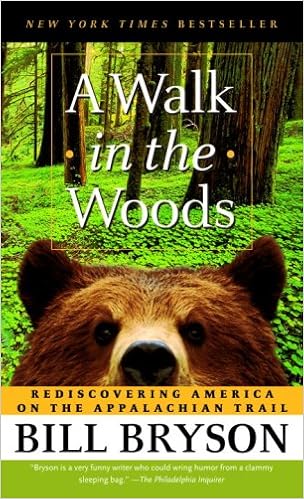
A Walk in the Woods – Bill Bryson

My Rating – If you are look for something to read

Level – easy, fairly short

Summary
Bill Bryson decides he wants to hike the whole of the Appalachian Trail. He realizes that it will be long and he will be on his own, so he puts it out there that he’d like to have someone come with him. An old friend calls up and agrees to go. The first part of the book deals with their antics as they start off on their hike. Then the book somewhat drifts in the middle as he returns home (the plan is not to do the tail all at once, but instead break it up into different parts). He gives a bit of the history of the National Park service in general and the AT in particular.

All the while doing minor hikes in the area of the trail that runs near his house, as well as taking trip down in Virginia and Pennsylvania to do other parts for a few days at a time. The final part of the book, he meets back up with his buddy Katz, to hike thru Main’s 100 Mile Wilderness. He wraps up the book with some final thoughts and reflections on his experience.

My Thoughts
By far the best part of the book is his early exploits with Katz. Anyone with jackass friends or people who have gone on long multi-day hikes with, let’s say, less equipped people, will appreciate the humor of the situation. The middle part really seems a bit listless and even like a later edition. Maybe it was just less interesting to me as I am pretty familiar with the AT and hike the Smokies at least once a year.

This is also a movie now. I have no idea if it is any good, but if it’s on Amazon Prime or something, it’s probably worth watching.